
Hearing that you need to meet an oncologist can feel overwhelming. Many people arrive with questions, concerns, and uncertainty. A First Oncology Consultation is not just about discussing cancer. It is the first step toward understanding your condition and creating a personalized treatment plan. Knowing what to expect can help you feel more prepared and confident during the visit.
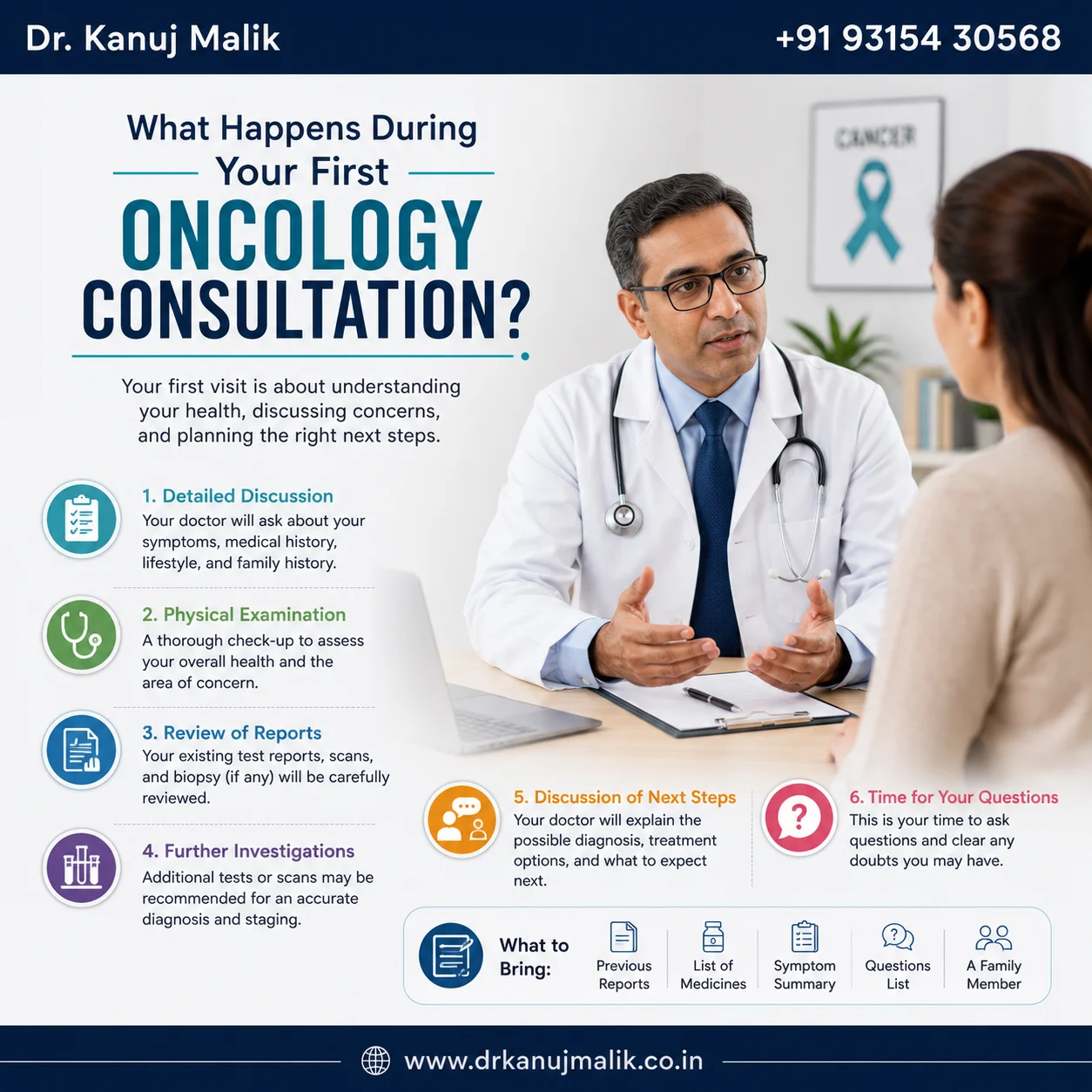
In most cases, the first appointment focuses on gathering medical information, reviewing previous reports, performing a physical examination, and deciding if additional tests are required. Treatment decisions are often made after all necessary investigations are complete.
What Is a First Oncology Consultation?
A First Oncology Consultation is your first detailed meeting with a cancer specialist. During this visit, the oncologist studies your medical history, symptoms, previous investigations, and overall health. The goal is to understand your condition before recommending the next steps.
If cancer has already been diagnosed, the consultation helps determine its type, stage, and possible treatment options. If the diagnosis is still uncertain, the doctor may recommend additional tests to reach an accurate diagnosis.
Who Will You Meet During Your First Oncology Consultation?
Depending on your condition, you may meet one or more cancer specialists.
- Medical Oncologist: Manages chemotherapy, immunotherapy, targeted therapy, and other medical treatments.
- Surgical Oncologist: Performs surgery for cancer diagnosis or treatment. Learn more about a Surgical Oncologist in Noida.
- Radiation Oncologist: Plans and delivers radiation therapy when needed.
- Other Specialists: Radiologists, pathologists, nutritionists, and oncology nurses may also become part of your care team.
How to Prepare Before Your First Oncology Consultation?
Preparing before your appointment helps the consultation become more productive.
- Write down your symptoms and when they started.
- Make a list of all medicines and supplements you currently take.
- Collect previous reports, scans, blood tests, and biopsy reports.
- Note any family history of cancer.
- Prepare a list of questions you want to ask.
- Consider bringing a trusted family member or friend for support.
If you have recently undergone a biopsy, keeping the complete report ready can save time during the consultation. You can also learn more about the role of biopsy in cancer diagnosis.
Documents to Bring
| Document | Recommended |
|---|---|
| Previous medical reports | ✔ |
| Blood test reports | ✔ |
| CT, MRI, or PET scan reports | ✔ |
| Biopsy report | ✔ |
| Current medication list | ✔ |
| Health insurance documents | If applicable |
| Government ID | Recommended |
What Happens Before You Meet the Oncologist?
Your visit usually begins at the reception desk. The hospital staff completes the registration process and verifies your medical records.
Before the consultation, a nurse may check:
- Height
- Weight
- Blood pressure
- Temperature
- Pulse rate
You may also be asked to complete a medical questionnaire covering your symptoms, previous illnesses, surgeries, allergies, and family history.
What Happens During Your First Oncology Consultation?
The First Oncology Consultation usually lasts between 30 and 60 minutes. Complex cases may take longer.
1. Detailed Medical History
The oncologist begins by understanding your overall health. You may be asked about:
- Current symptoms
- When the symptoms began
- Weight loss or appetite changes
- Smoking or alcohol history
- Previous illnesses
- Past surgeries
- Family history of cancer
- Current medications
Answer honestly and completely. Even details that seem minor may help guide the diagnosis.
2. Physical Examination
The doctor performs a physical examination based on your symptoms. This may include checking the affected area, examining nearby lymph nodes, and assessing your overall health.
The examination helps determine if further investigations are required.
3. Review of Previous Reports
Your oncologist carefully reviews all available reports, including blood tests, imaging scans, pathology reports, and biopsy findings.
If you already have PET-CT imaging, MRI, or CT scans, bring both the reports and images whenever possible. Understanding these reports helps avoid unnecessary repeat testing.
You can also read more about the importance of a PET scan for cancer detection if your doctor recommends one.
4. Discussion About Additional Tests
Not every patient receives a confirmed diagnosis during the first visit.
If more information is needed, your oncologist may recommend:
- Blood tests
- Ultrasound
- CT scan
- MRI
- PET-CT
- Biopsy
- Genetic testing in selected cases
These investigations help confirm the diagnosis and determine the stage of the disease before treatment planning begins.
5. Discussion of the Next Steps
Before your appointment ends, the doctor explains what happens next. You should leave with a clear understanding of:
- Which tests are still needed
- How long the reports may take
- When to return for follow-up
- What decisions will be made after the reports are available
A good First Oncology Consultation gives you clarity instead of confusion. It creates a roadmap for the next stage of your care.
Questions Your Oncologist May Ask
Your answers help the doctor understand your condition better. During your First Oncology Consultation, you may be asked:
| Question | Why It Matters |
|---|---|
| When did your symptoms begin? | Helps assess disease progression. |
| Have you noticed weight loss? | Provides important clinical information. |
| Do you have a family history of cancer? | May indicate inherited risk. |
| Do you smoke or consume alcohol? | Identifies lifestyle-related risk factors. |
| Are you taking any medicines? | Avoids drug interactions. |
| Have you had previous surgeries? | Supports treatment planning. |
Questions You Should Ask During Your First Oncology Consultation
Your appointment is also an opportunity to understand your diagnosis and treatment plan.
- What type of cancer is suspected or confirmed?
- What stage is the cancer?
- Do I need more tests?
- What treatment options are available?
- What are the possible side effects?
- How soon should treatment begin?
- Can I continue working during treatment?
- Should I make any lifestyle or dietary changes?
- Is a second opinion recommended?
If you are considering another expert opinion, read about the importance of a second opinion in cancer care.
Common Tests Recommended After Your First Oncology Consultation
The tests recommended depend on your symptoms and previous reports.
- Blood Tests: Assess your overall health and organ function.
- CT Scan: Creates detailed cross-sectional images.
- MRI: Evaluates soft tissues and certain organs.
- PET-CT Scan: Helps detect cancer activity and spread.
- Biopsy: Confirms the diagnosis by examining tissue under a microscope.
- Genetic Testing: Recommended for selected patients with a significant family history.
Timeline After Your First Oncology Consultation
Every patient follows a different journey. A typical timeline may look like this:
Day 1
First Oncology Consultation
Next Few Days
Blood tests or imaging studies if required.
Following Week
Biopsy or pathology reports become available.
Follow-Up Visit
The oncologist reviews the results and discusses treatment options.
Treatment Begins
The treatment plan may include surgery, chemotherapy, radiation therapy, targeted therapy, or a combination based on the diagnosis.
It Is Normal to Feel Nervous
Many patients feel anxious before their First Oncology Consultation. Some worry about test results. Others feel overwhelmed by the amount of information discussed.
These feelings are completely understandable. Bringing a trusted family member or friend can provide emotional support and help you remember important instructions.
Do’s and Don’ts Before Your Appointment
| Do | Don’t |
|---|---|
| Carry all previous reports. | Hide symptoms you think are unimportant. |
| Prepare your questions. | Stop medicines without medical advice. |
| Wear comfortable clothing. | Panic if additional tests are advised. |
| Arrive on time. | Assume treatment will start immediately. |
Should You Bring a Family Member?
Yes. A companion can help you stay calm during the discussion. They can also take notes, ask questions, and help you remember the treatment plan after the appointment.
When Should You Seek an Oncology Consultation?
Consult a cancer specialist if you experience persistent symptoms such as an unexplained lump, unusual bleeding, unexplained weight loss, long-lasting difficulty swallowing, or a non-healing ulcer.
Learn more about early warning signs of cancer that should not be ignored.
Frequently Asked Questions
How long does a First Oncology Consultation take?
Most appointments last between 30 and 60 minutes. Complex cases may require additional time.
Will treatment start on the same day?
Not always. Many patients need additional investigations before a treatment plan is finalized.
Can I eat before my appointment?
Usually yes. However, follow any specific instructions provided if tests are scheduled on the same day.
Can I bring reports on my phone?
Digital copies are useful, but printed reports and imaging films are also helpful when available.
Is it okay to seek a second opinion?
Yes. Seeking a second opinion is common and can help you make informed treatment decisions.
Dr. Kanuj Malik
Surgical Oncologist
Phone: 093154 30568
Address: Shop No. 143, 1st Floor, Cleo Street, Near Cleo County, Sector 121, Noida, Basi Bahuddin Nagar, Uttar Pradesh 201301
Google Maps: View Clinic Location
Conclusion
Your First Oncology Consultation is the beginning of understanding your health and planning the right care. It focuses on gathering information, reviewing reports, performing an examination, and identifying the next steps. Preparing your medical records, asking questions, and understanding the process can make the experience less stressful and help you participate confidently in your treatment journey.