
A fibroadenoma is one of the most common non-cancerous breast lumps. It usually affects women in their teens, 20s, and 30s. Finding a breast lump can be stressful. Many people immediately think about cancer. The good news is that a simple fibroadenoma rarely becomes cancer.
Still, every new breast lump should be examined by a doctor. Some breast cancers can appear similar to benign lumps during the early stages. A proper evaluation helps confirm the diagnosis and guides the next steps.
Quick Answer
Can fibroadenoma turn into cancer? In most cases, no. A simple fibroadenoma is a benign breast lump and almost never changes into breast cancer. A complex fibroadenoma may carry a slightly higher future risk of breast cancer, but it does not mean the lump itself is cancerous. If a lump grows quickly, changes shape, or appears suspicious on imaging, your doctor may recommend further testing.
Key Takeaways
- Most fibroadenomas are benign breast lumps.
- Simple fibroadenomas rarely become cancer.
- Complex fibroadenomas need closer medical follow-up.
- Ultrasound, mammography, or biopsy may be needed to confirm the diagnosis.
- Any new or changing breast lump should be evaluated by a healthcare professional.
What Is a Fibroadenoma?
A fibroadenoma is a solid, non-cancerous breast lump made of glandular and fibrous tissue. It usually feels smooth, firm, and movable under the skin. Many women notice it during self-examination or a routine health check.
Most fibroadenomas grow slowly. Some remain the same size for years. Others may shrink naturally over time, especially after menopause when hormone levels decrease.
If you notice a new breast lump, it is important to understand the difference between a benign and cancerous breast lump.
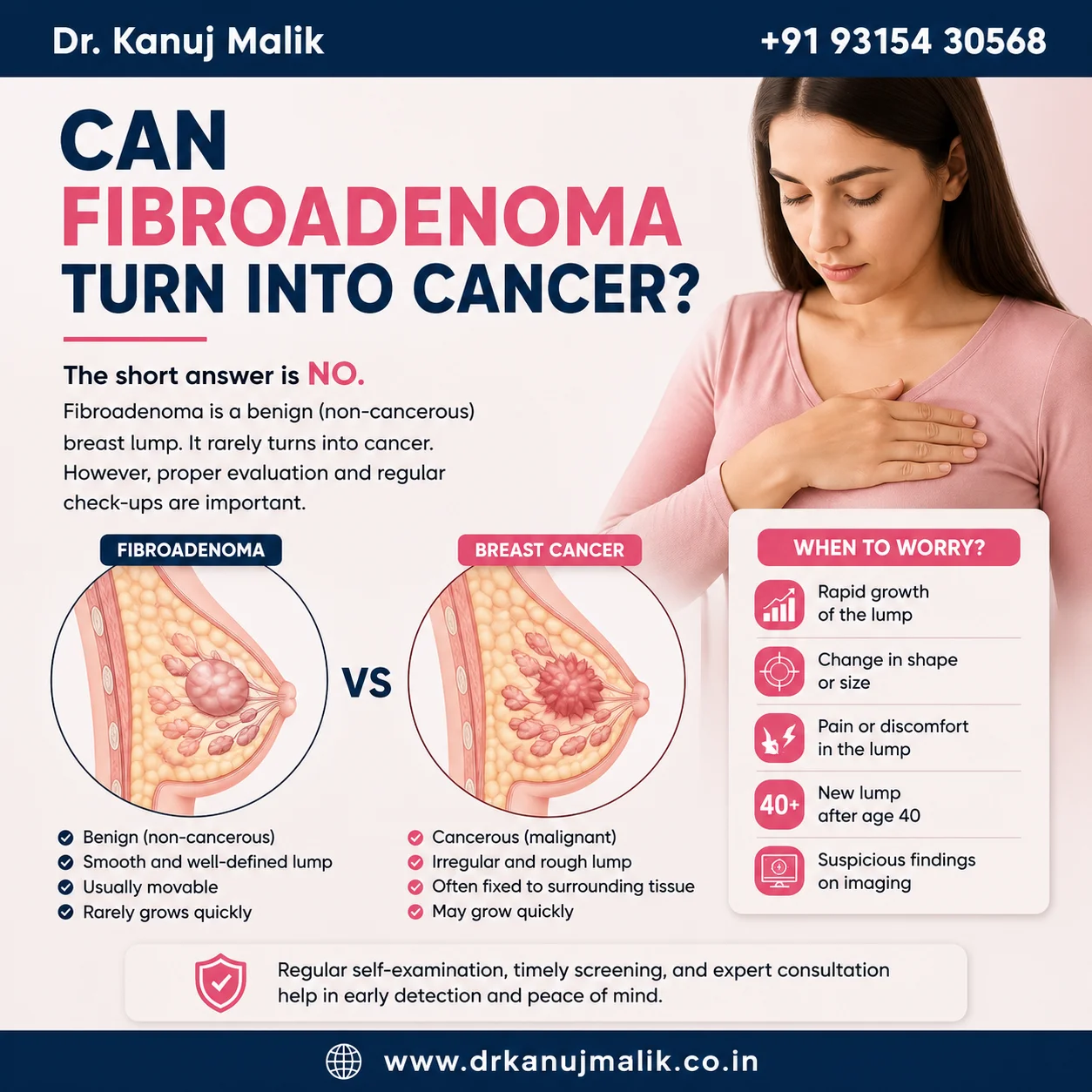
Can Fibroadenoma Turn Into Cancer?
The answer is almost always no. A simple fibroadenoma is considered a benign condition. It does not usually change into breast cancer.
Some complex fibroadenomas contain additional tissue changes. These changes can slightly increase a woman’s future risk of breast cancer compared to the general population. This does not mean the fibroadenoma has become cancer.
Your doctor may recommend more detailed testing if:
- The lump grows rapidly.
- The lump feels hard or fixed.
- The borders look irregular on imaging.
- You are over 40 and develop a new breast lump.
- There is a strong family history of breast or ovarian cancer.
Knowing the early warning signs of breast cancer can also help you identify changes that should never be ignored.
Types of Fibroadenoma
| Type | Description | Cancer Risk |
|---|---|---|
| Simple Fibroadenoma | Uniform cells and smooth appearance. | Very low. |
| Complex Fibroadenoma | Contains additional tissue changes. | Slightly higher future risk. |
| Juvenile Fibroadenoma | Usually affects teenagers. | Very low. |
| Giant Fibroadenoma | Larger than 5 cm and may need removal. | Usually benign. |
Common Symptoms
Many fibroadenomas do not cause pain. They are often discovered by chance.
- Round or oval breast lump.
- Smooth surface.
- Firm or rubbery feel.
- Moves easily under the skin.
- Usually painless.
- May increase in size during pregnancy or hormonal changes.
If you also experience breast discomfort, this guide on breast pain and relief may help you understand possible causes.
What Causes Fibroadenoma?
The exact cause is not fully understood. Hormonal changes, especially estrogen, are believed to play an important role. Fibroadenomas are more common during the reproductive years. They may enlarge during pregnancy or hormone therapy and become smaller after menopause.
Who Is More Likely to Develop Fibroadenoma?
- Women between 15 and 35 years of age.
- People with hormonal fluctuations.
- Women during pregnancy.
- Women using hormone-based medications.
- People with a personal history of benign breast disease.
How Doctors Diagnose a Fibroadenoma
A breast lump should never be diagnosed based only on how it feels. Your doctor will recommend one or more tests to confirm the diagnosis.
- Clinical breast examination.
- Breast ultrasound.
- Mammography, based on your age and symptoms.
- Core needle biopsy if the imaging findings are unclear or suspicious.
You can learn more about the types of biopsy used in cancer diagnosis.
Can a Fibroadenoma Be Mistaken for Cancer?
Yes. Some breast cancers and other breast tumors can look similar to a fibroadenoma, especially during the early stages. Imaging helps identify the nature of the lump, but a biopsy may still be needed if there are suspicious features.
Your doctor may recommend additional testing if:
- The lump grows quickly.
- The edges appear irregular.
- The lump is fixed to surrounding tissue.
- The imaging results are not typical of a fibroadenoma.
- You have a strong family history of breast cancer.
Fibroadenoma vs Breast Cancer
| Feature | Fibroadenoma | Breast Cancer |
|---|---|---|
| Movement | Usually movable. | May feel fixed. |
| Shape | Round and smooth. | Often irregular. |
| Texture | Firm and rubbery. | Hard. |
| Growth | Usually slow. | Can continue to grow. |
| Nature | Benign. | Malignant. |
When Should a Fibroadenoma Be Removed?
Many fibroadenomas do not require surgery. Regular monitoring is enough if the diagnosis is clear and the lump remains stable.
Your doctor may advise removal when:
- The lump keeps growing.
- It becomes painful.
- It is larger than expected.
- A biopsy shows atypical cells.
- The diagnosis remains uncertain.
Treatment Options
Treatment depends on the size of the lump, symptoms, and test results.
- Regular observation with follow-up imaging.
- Vacuum-assisted excision for selected small fibroadenomas.
- Surgical removal (lumpectomy) for large or symptomatic lumps.
Can Fibroadenoma Come Back?
A removed fibroadenoma usually does not return in the same location. However, some women may develop a new fibroadenoma in another area of the breast. Regular follow-up helps detect any new changes early.
Fibroadenoma During Pregnancy
Hormonal changes during pregnancy can make a fibroadenoma larger. This does not automatically mean it has become cancerous. Your doctor may recommend monitoring until after delivery unless there are concerning features.
Breast Health Tips
- Perform regular breast self-examinations.
- Attend age-appropriate breast screening.
- Maintain a healthy weight.
- Exercise regularly.
- Limit alcohol intake.
- Avoid smoking.
- Report any new breast changes promptly.
Learn how to perform a proper breast self-examination at home and understand the importance of regular mammogram screening.
Frequently Asked Questions
Can a fibroadenoma disappear without treatment?
Yes. Some fibroadenomas become smaller over time or remain unchanged for many years.
Is every fibroadenoma painful?
No. Most fibroadenomas are painless. Pain may occur due to hormonal changes or pressure on nearby tissue.
Can fibroadenoma affect breastfeeding?
Most fibroadenomas do not interfere with breastfeeding. Your doctor can advise you if the lump is large or located near the milk ducts.
How often should a fibroadenoma be checked?
The follow-up schedule depends on your age, imaging findings, and medical history. Your doctor will recommend the appropriate interval
Phone: 093154 30568
Clinic Address:
Shop No. 143, 1st Floor, Cleo Street, Near Cleo County, Sector 121, Noida, Basi Bahuddin Nagar,
Uttar Pradesh – 201301
Location: View on Google Maps
If you notice a new breast lump, persistent breast changes, or abnormal imaging results, consult a qualified surgical oncologist for an accurate diagnosis and personalized treatment plan.