
Chemotherapy is one of the most effective cancer treatments. However, it can also cause several side effects. One of the most common is chemotherapy fatigue. This is more than feeling tired after a busy day. It is a deep physical and mental exhaustion that does not improve completely with sleep or rest.
Chemotherapy fatigue can affect work, daily activities, emotions, and quality of life. The good news is that it can often be managed with the right medical care, healthy habits, and timely support. Understanding the causes and learning practical ways to improve energy can make cancer treatment more comfortable.
Dr. Kanuj Malik, a Surgical Oncologist in Noida, advises patients to report persistent fatigue early. In many cases, simple measures such as treating anemia, improving nutrition, staying active, and maintaining good sleep can significantly reduce chemotherapy fatigue.
What Is Chemotherapy Fatigue?
Chemotherapy fatigue is a common side effect of cancer treatment. It is a feeling of extreme tiredness that affects both the body and mind. Unlike normal tiredness, it does not disappear after a good night’s sleep.
Many patients experience low energy throughout the day. Even simple activities like walking, bathing, or preparing meals may feel difficult. Some people also notice poor concentration, reduced motivation, and emotional exhaustion.
The severity of chemotherapy fatigue varies from person to person. Some patients experience mild tiredness, while others may need extra support with everyday tasks.
Chemotherapy Fatigue vs Normal Tiredness
| Normal Tiredness | Chemotherapy Fatigue |
|---|---|
| Usually improves after rest or sleep. | Often continues even after sleeping. |
| Occurs after physical activity. | Can happen without any activity. |
| Lasts for a short time. | May continue for weeks or months. |
| Does not usually affect daily life. | Can make routine activities difficult. |
Knowing the difference helps patients understand that chemotherapy fatigue is a recognised medical condition and should not be ignored.
Why Does Chemotherapy Fatigue Happen?
Several factors work together to cause chemotherapy fatigue. The treatment attacks cancer cells, but healthy cells can also be affected during the process.
- Chemotherapy can reduce healthy red blood cells, leading to anemia.
- The body uses extra energy to repair healthy tissues.
- Inflammation caused by treatment can increase tiredness.
- Nausea, vomiting, and poor appetite reduce nutritional intake.
- Sleep problems make recovery slower.
- Stress, anxiety, and emotional changes also contribute to fatigue.
- Some medicines used during cancer treatment may increase drowsiness.
Many patients experience more than one of these factors at the same time.
Common Symptoms of Chemotherapy Fatigue
Symptoms are different for every patient. The most common signs include:
- Constant tiredness throughout the day.
- Weakness in the arms and legs.
- Heavy feeling in the body.
- Difficulty concentrating or remembering things.
- Low motivation to perform routine activities.
- Feeling sleepy even after adequate rest.
- Shortness of breath during mild activity.
- Reduced interest in social activities.
If these symptoms become severe or suddenly worsen, patients should inform their oncologist.
Who Is More Likely to Experience Chemotherapy Fatigue?
Although anyone receiving chemotherapy can develop fatigue, some factors increase the risk.
- Advanced-stage cancer.
- Multiple chemotherapy cycles.
- Anemia or nutritional deficiencies.
- Poor sleep quality.
- Ongoing pain.
- Stress, anxiety, or depression.
- Other medical conditions such as diabetes or heart disease.
Patients recovering from surgery or radiation therapy along with chemotherapy may also experience more severe fatigue.
How Long Does Chemotherapy Fatigue Last?
Chemotherapy fatigue often starts a few days after treatment. It may become more noticeable as treatment cycles continue.
Many patients begin to feel better within a few weeks after completing chemotherapy. However, some people continue to experience fatigue for several months. Recovery depends on the type of cancer, treatment plan, nutritional status, and overall health.
Long-lasting fatigue does not always mean cancer has returned. However, ongoing symptoms should always be evaluated by a cancer specialist.
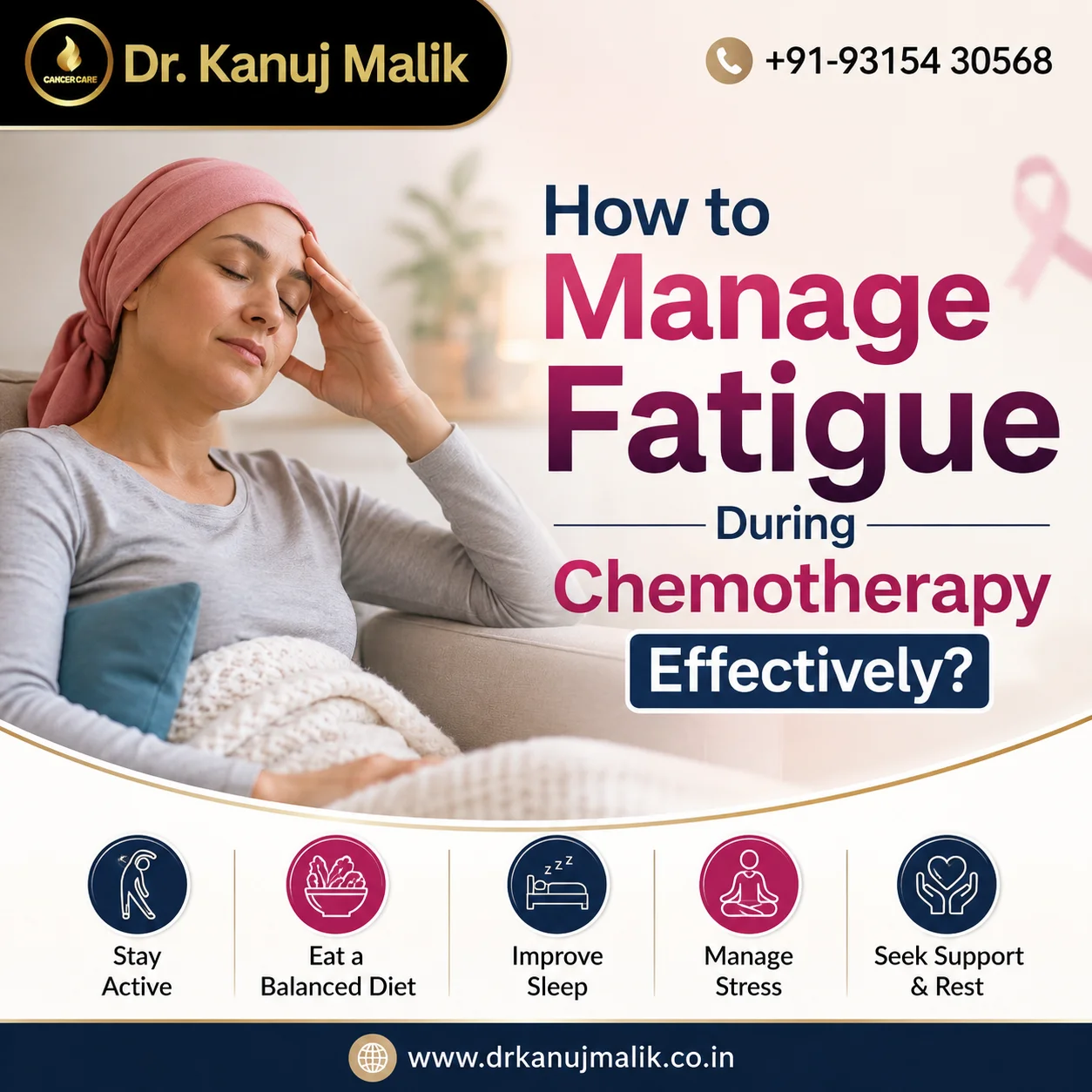
How to Manage Fatigue During Chemotherapy Effectively?
Managing chemotherapy fatigue requires a combination of medical care and healthy daily habits. Small lifestyle changes can make a noticeable difference over time.
1. Stay Physically Active
Light exercise is one of the most effective ways to reduce chemotherapy fatigue. Gentle activities improve blood circulation, maintain muscle strength, and support better sleep.
- Take short walks.
- Practice gentle stretching.
- Try breathing exercises.
- Perform simple chair exercises if walking feels difficult.
Before starting any exercise routine, discuss it with your treating oncologist. Regular movement is also associated with better recovery and improved long-term outcomes. Learn more about the role of exercise in improving cancer survival rates.
2. Eat a Balanced Diet
Good nutrition helps the body recover during cancer treatment. A balanced diet may reduce chemotherapy fatigue and improve overall strength.
- Choose protein-rich foods such as eggs, dal, paneer, fish, and lean chicken.
- Eat fresh fruits and vegetables every day.
- Include whole grains for long-lasting energy.
- Drink enough water to prevent dehydration.
- Eat small meals if your appetite is low.
A personalised nutrition plan may be helpful during treatment. Read our guide on nutrition during cancer care for practical dietary tips.
3. Improve Your Sleep Routine
Good sleep supports healing and helps manage chemotherapy fatigue.
- Sleep and wake up at the same time every day.
- Avoid caffeine late in the evening.
- Keep your bedroom quiet and comfortable.
- Limit screen time before bedtime.
- Practice deep breathing or meditation to relax.
4. Save Your Energy Wisely
Energy conservation is an important part of fatigue management.
- Complete important tasks when your energy is highest.
- Break large activities into smaller steps.
- Take short rest breaks instead of staying in bed all day.
- Accept help from family and friends.
- Use a chair while cooking or bathing if needed.
When Should You Contact Your Doctor?
Some symptoms require immediate medical attention. Contact your oncology team if chemotherapy fatigue is accompanied by:
- High fever.
- Chest pain.
- Difficulty breathing.
- Severe dizziness or fainting.
- Confusion or sudden weakness.
- Persistent vomiting or inability to eat.
- Signs of dehydration.
Your doctor may recommend blood tests to check for anemia, infection, or other treatable causes of fatigue.
Common Myths About Chemotherapy Fatigue
| Myth | Fact |
|---|---|
| More bed rest always helps. | Too much rest may reduce muscle strength and increase fatigue. |
| Fatigue means cancer is getting worse. | Fatigue is a common side effect of chemotherapy and has many possible causes. |
| Exercise should be avoided. | Light exercise is often recommended by oncologists. |
| There is nothing that can improve fatigue. | Medical treatment, nutrition, activity, and good sleep can significantly help. |
Tips for Family Members and Caregivers
Support from loved ones plays an important role in recovery.
- Help with household work when needed.
- Encourage light physical activity.
- Prepare healthy meals.
- Listen with patience and offer emotional support.
- Keep track of new symptoms and report concerns to the doctor.
Expert Cancer Care with Dr. Kanuj Malik
Managing chemotherapy fatigue requires personalised care. Dr. Kanuj Malik, Surgical Oncologist, focuses on treating cancer while helping patients manage treatment-related side effects that affect their quality of life.
Clinic Address:
Shop No. 143, 1st Floor, Cleo Street, Near Cleo County, Sector 121, Noida, Basi Bahuddin Nagar,
Uttar Pradesh – 201301
https://maps.app.goo.gl/mgxFLjbfjS99bWkv8
Phone: 93154 30568
Patients are also encouraged to understand every stage of their treatment. Reading about the importance of a second opinion in cancer diagnosis and treatment and personalized medicine in cancer care can help them make informed decisions.
Conclusion
Chemotherapy fatigue is one of the most common side effects of cancer treatment. It can affect physical strength, emotional health, and daily activities. The condition is manageable with early medical evaluation, healthy nutrition, light exercise, good sleep, and proper support.
If fatigue becomes severe or lasts for a long time, do not ignore it. Discuss your symptoms with your oncologist so that the underlying cause can be identified and treated at the right time.
Frequently Asked Questions
Can chemotherapy fatigue be prevented?
It cannot always be prevented, but healthy habits and early medical care can reduce its severity.
How long does chemotherapy fatigue usually last?
Many patients improve within a few weeks after treatment. Some may take several months to regain their normal energy levels.
Does drinking more water help with chemotherapy fatigue?
Yes. Staying hydrated supports normal body functions and may reduce fatigue caused by dehydration.
Is walking safe during chemotherapy?
Light walking is safe for many patients. Always follow your oncologist’s advice based on your health condition.
Can anemia make chemotherapy fatigue worse?
Yes. Low red blood cell counts reduce oxygen delivery to tissues and are a common cause of severe fatigue.
Should I exercise if I feel tired?
Gentle exercise is often more beneficial than complete bed rest. Your doctor can recommend the safest activity level.
When should I worry about chemotherapy fatigue?
Seek medical advice if fatigue suddenly worsens or is associated with fever, chest pain, difficulty breathing, severe dizziness, or confusion.