
A mammogram can provide more information than checking for breast cancer. It also tells you about your breast density. Many women first learn they have dense breasts after reading their mammogram report. This finding often leads to an important question. Do dense breasts mean you need more tests?
The answer depends on your overall risk. Breast density is only one part of the picture. Your age, family history, previous breast conditions, and genetic risk also matter. Understanding Breast Density and Supplemental Screening can help you make informed decisions with your doctor.
This guide explains what dense breasts mean, how they affect mammogram accuracy, and when additional imaging may be recommended.
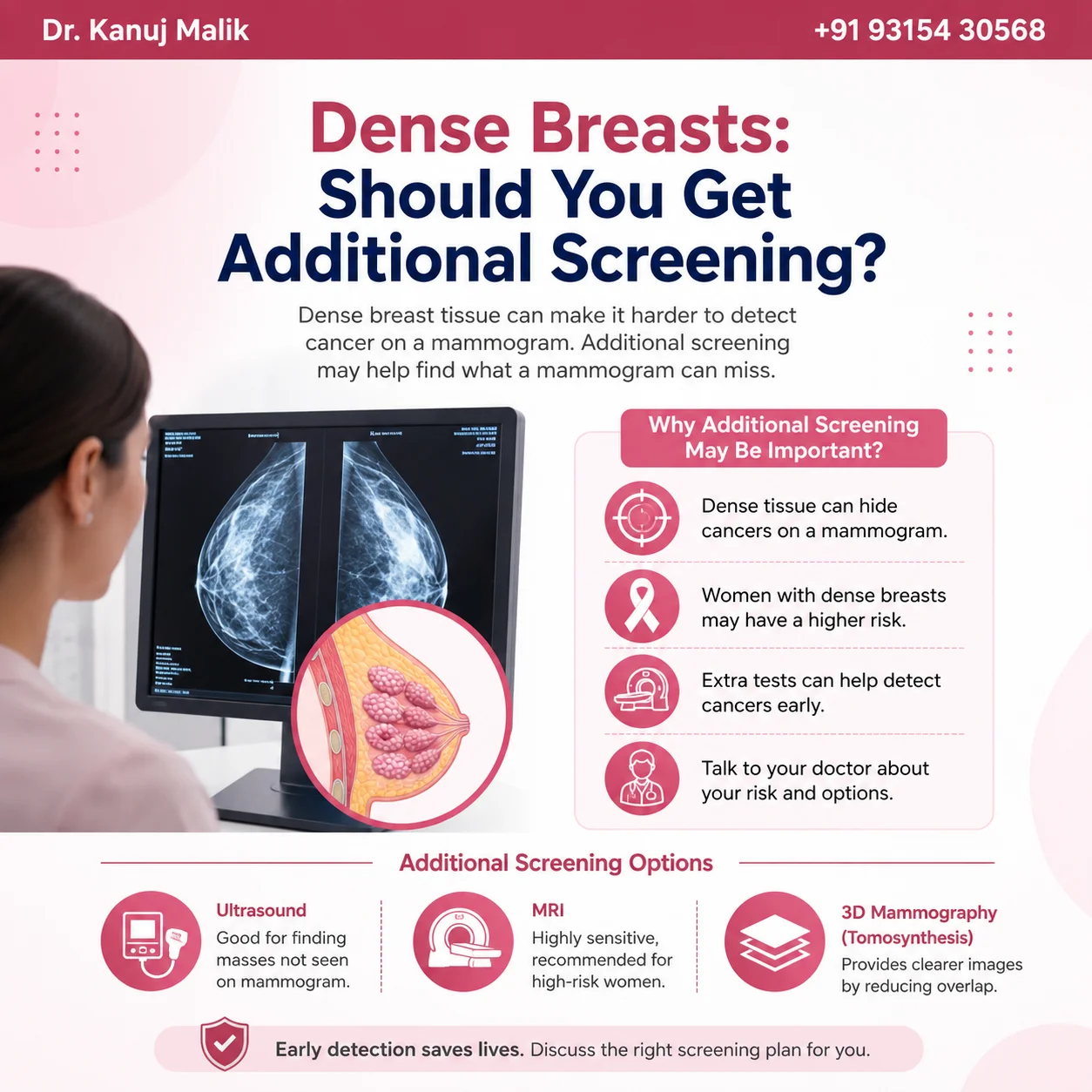
What Does Breast Density Mean?
Breast density describes the amount of fibrous and glandular tissue compared with fatty tissue inside the breast. It is not related to breast size or firmness. A woman with small breasts can have dense breasts, while someone with larger breasts may have low breast density.
Breast density can only be identified through a mammogram. It cannot be detected during a breast self-exam or a clinical examination.
Dense breast tissue is common. It is considered a normal mammographic finding. Having dense breasts does not mean you have breast cancer. However, it can make cancer more difficult to detect on a mammogram.
If you would like to understand more about breast health and cancer care, visit our page on Breast Cancer Specialist in Noida.
Breast Density Categories (BI-RADS Classification)
Radiologists classify breast density using the BI-RADS system. Your mammogram report will usually mention one of the following categories.
| BI-RADS Category | Breast Density | What It Means |
|---|---|---|
| A | Almost entirely fatty | Low breast density. Mammograms are generally easier to interpret. |
| B | Scattered fibroglandular tissue | Mostly fatty tissue with some dense areas. |
| C | Heterogeneously dense | Large areas of dense tissue may hide small abnormalities. |
| D | Extremely dense | Very dense tissue can reduce the sensitivity of mammography. |
Categories C and D are generally considered dense breasts. Your doctor may discuss Breast Density and Supplemental Screening if you fall into these categories.
Why Dense Breasts Make Cancer Harder to Detect?
A mammogram works by creating images of breast tissue. Fatty tissue appears dark on the image. Dense tissue appears white.
Many breast cancers also appear white. This creates what doctors often describe as a “white-on-white” effect. Small tumors can blend into dense tissue and become more difficult to identify.
You can think of it like trying to find a white shell on a sandy beach. The object is present, but it becomes harder to see because it blends into the background.
This is one reason why discussions about Breast Density and Supplemental Screening have become increasingly important. Additional imaging may help identify findings that are not clearly visible on a standard mammogram.
If you notice warning signs between routine screenings, read our guide on Symptoms and Early Warning Signs of Breast Cancer.
Does Having Dense Breasts Increase Breast Cancer Risk?
Dense breasts are associated with a higher risk of breast cancer compared with breasts that contain mostly fatty tissue. However, breast density alone does not determine your overall risk.
Your doctor may also consider several other factors before recommending additional screening.
- Your age.
- Family history of breast or ovarian cancer.
- Known genetic mutations such as BRCA1 or BRCA2.
- Previous breast biopsy findings.
- Hormone replacement therapy.
- Personal history of breast cancer.
- Overall lifestyle and body weight.
Many women with dense breasts never develop breast cancer. Likewise, breast cancer can occur in women who do not have dense breasts. That is why risk assessment should always be personalized.
Our article on The Hidden Connection Between Obesity and Breast Cancer explains how lifestyle can also influence breast health.
Who Should Consider Supplemental Screening?
Not every woman with dense breasts needs extra imaging. The decision depends on your individual risk profile.
Your healthcare provider may discuss Breast Density and Supplemental Screening if you have:
- Heterogeneously dense or extremely dense breasts.
- A strong family history of breast cancer.
- A known inherited cancer gene mutation.
- A previous diagnosis of breast cancer.
- A history of chest radiation at a young age.
- An increased lifetime risk based on medical assessment.
Your doctor will review your mammogram findings together with your medical history before recommending another imaging test. In many cases, routine mammography remains the appropriate screening method.
If you have concerns about your screening report or family history, scheduling an evaluation with an experienced Surgical Oncologist in Noida can help you understand your options.
This article is intended for educational purposes and should not replace professional medical advice.
Dr. Kanuj Malik is a Surgical Oncologist with over 14 years of experience in cancer care. He completed his MBBS and MS in General Surgery from Maulana Azad Medical College and Lok Nayak Hospital. He later earned an MCh in Surgical Oncology from the Cancer Institute (WIA), Adyar, Chennai.
Dr. Malik has extensive experience in breast cancer treatment, head and neck cancers, gastrointestinal cancers, gynecological cancers, genitourinary cancers, and musculoskeletal cancer surgeries. His approach focuses on evidence-based diagnosis, personalized treatment planning, and patient education.
Clinic Address:
Shop No. 143, 1st Floor, Cleo Street, Near Cleo County, Sector 121, Basi Bahuddin Nagar, Noida, Uttar Pradesh 201301
Phone: 093154 30568
If you would like to know more about Dr. Malik’s experience and qualifications, visit the About Dr. Kanuj Malik page or book a consultation appointment to discuss your breast screening needs.