
Stress is a part of modern life. Deadlines, financial pressure, family responsibilities, and health concerns can all contribute to it. Many people also wonder if long-term stress can increase their risk of developing cancer. It is a common concern, but the answer is more complex than a simple yes or no.
Current medical evidence does not show that stress directly causes cancer. However, chronic stress can affect your body in several ways. It may weaken healthy lifestyle habits, influence hormone levels, and reduce the body’s ability to recover from illness. These changes may indirectly contribute to conditions that increase cancer risk over time.
Understanding the connection between stress and cancer helps you make informed decisions about your health. It also highlights why stress management should be part of an overall healthy lifestyle.
What Is Stress?
Stress is your body’s natural response to physical, emotional, or mental challenges. When you face a difficult situation, your brain signals the release of stress hormones such as cortisol and adrenaline. These hormones prepare your body to respond quickly.
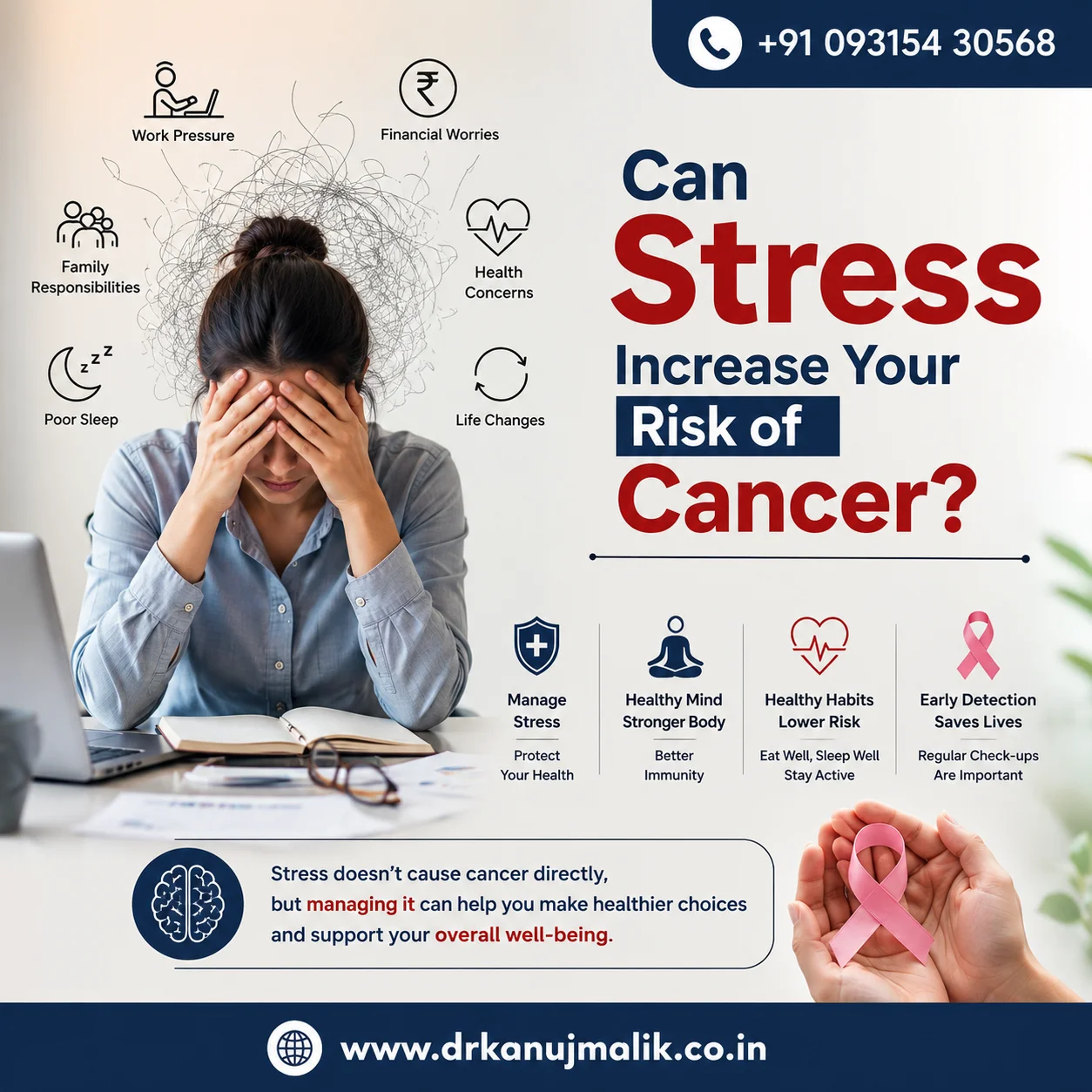
Short-term stress is normal. It can improve focus and help you deal with temporary challenges. Once the situation passes, your hormone levels usually return to normal.
Problems begin when stress continues for weeks or months without relief. This is known as chronic stress. Unlike short-term stress, chronic stress keeps your body in a constant state of alertness. Over time, this can affect both physical and mental health.
Common Causes of Chronic Stress
Everyone experiences stress differently. What feels manageable for one person may become overwhelming for another.
- Long working hours and job pressure
- Financial difficulties
- Family responsibilities
- Relationship challenges
- Chronic illness
- Poor sleep
- Major life changes
- Caregiving responsibilities
When these factors continue for a long time, the body’s stress response may remain active. This is where chronic stress becomes a health concern.
Acute Stress vs Chronic Stress
| Acute Stress | Chronic Stress |
|---|---|
| Short-term response | Lasts for weeks, months, or longer |
| Usually resolves quickly | Persists without adequate recovery |
| Can improve focus during emergencies | May negatively affect physical and emotional health |
| Hormone levels return to normal | Stress hormones remain elevated for longer periods |
Recognizing the difference is important because most health concerns are linked to chronic stress rather than temporary stressful situations.
Can Stress Increase Your Risk of Cancer?
The simple answer is that stress alone does not directly cause cancer. According to current medical understanding, no strong evidence proves that emotional stress by itself turns healthy cells into cancer cells.
However, chronic stress may indirectly influence cancer risk. Long-lasting stress can affect hormone balance, immune function, sleep quality, and lifestyle habits. These changes may create conditions that are less supportive of overall health.
For example, people living with chronic stress are more likely to:
- Smoke or use tobacco
- Consume excessive alcohol
- Eat an unhealthy diet
- Exercise less
- Sleep poorly
- Gain excess body weight
Many of these lifestyle factors are already established risk factors for several types of cancer. This is why stress management is considered an important part of maintaining long-term health.
Learning about healthy lifestyle changes that can lower cancer risk can help reduce many preventable risk factors. This internal resource explains practical habits that support overall well-being. :contentReference[oaicite:0]{index=0}
How Does Chronic Stress Affect the Body?
Chronic stress does not affect just your emotions. It can influence several systems throughout the body.
Higher Cortisol Levels
Cortisol is often called the stress hormone. During stressful situations, it helps regulate blood sugar, blood pressure, and energy levels. When cortisol remains elevated for long periods, it may interfere with normal body functions.
Changes in the Immune System
Your immune system plays an important role in protecting your body from infections and removing damaged cells. Prolonged stress may reduce how effectively the immune system responds. Researchers continue to study how these changes may influence overall health, including cancer-related processes.
Chronic Inflammation
Long-term stress may contribute to persistent low-grade inflammation in some individuals. Chronic inflammation has been linked with several long-term health conditions. It is one of many areas being actively studied in cancer research. However, inflammation alone does not mean someone will develop cancer.
Sleep Disturbances
Many people experiencing chronic stress struggle with poor sleep. Lack of quality sleep affects hormone balance, immune function, mood, and overall recovery. Improving sleep habits is an important part of stress management.
Can Stress Help Cancer Cells Grow?
Researchers continue to explore how stress hormones interact with cancer cells. Laboratory studies suggest that stress hormones may influence processes such as inflammation, blood vessel formation, and communication between cells. However, these findings do not prove that stress directly causes cancer in humans.
Cancer develops because of multiple factors. These include genetics, age, environmental exposures, lifestyle habits, infections, and random genetic mutations within cells. Stress may be one piece of a much larger picture rather than the primary cause.
The most practical approach is to focus on reducing long-term stress while also addressing established cancer risk factors through healthy daily habits and regular medical care.
Does Stress Increase Cancer Risk Indirectly?
Although stress itself is not considered a direct cause of cancer, it can influence behaviours that increase cancer risk. People experiencing long-term stress may find it difficult to maintain healthy routines. Over time, these lifestyle changes can have a greater impact on overall health than stress alone.
Chronic stress may contribute to:
- Smoking or tobacco use
- Excessive alcohol consumption
- Poor food choices
- Weight gain or obesity
- Reduced physical activity
- Poor sleep quality
- Skipping preventive health check-ups
Several of these factors are well-established contributors to different types of cancer. Making healthier lifestyle choices remains one of the most effective ways to lower overall cancer risk.
You can also read our detailed guide on the benefits of exercise for cancer prevention and overall health to understand how regular physical activity supports long-term wellness.
Can Stress Affect People Already Diagnosed with Cancer?
Yes. Stress can have a significant impact on people who are already undergoing cancer treatment. A cancer diagnosis often brings emotional, physical, and financial challenges. Feeling anxious or overwhelmed during treatment is common.
High stress levels may affect:
- Sleep quality
- Appetite
- Energy levels
- Treatment adherence
- Emotional well-being
- Overall quality of life
Managing stress does not replace cancer treatment. However, it can improve emotional health and help patients cope better during recovery.
Signs That Stress May Be Affecting Your Health
Everyone experiences stress differently. If symptoms continue for several weeks, it is important to discuss them with a healthcare professional.
- Persistent fatigue
- Difficulty sleeping
- Frequent headaches
- Muscle tension
- Poor concentration
- Irritability
- Digestive discomfort
- Changes in appetite
- Frequent illnesses
Science-Based Ways to Manage Stress
Stress cannot always be avoided, but healthy coping strategies can reduce its impact on your body.
- Walk for at least 30 minutes on most days.
- Practice deep breathing exercises.
- Try meditation or mindfulness.
- Sleep for 7–9 hours every night.
- Eat a balanced diet.
- Reduce excessive screen time before bedtime.
- Stay connected with family and friends.
- Seek professional counselling if stress becomes overwhelming.
Small daily improvements often provide greater long-term benefits than occasional major changes.
Foods That May Support Stress Management
A healthy diet supports both physical and mental well-being. While no food can eliminate stress completely, certain nutrient-rich foods may help support normal body functions.
- Leafy green vegetables
- Whole grains
- Nuts and seeds
- Fresh fruits and berries
- Fatty fish rich in Omega-3 fatty acids
- Yogurt and fermented foods
- Beans and lentils
- Bananas
Pairing healthy eating with regular exercise and adequate sleep provides the greatest overall benefit.
Healthy Habits That May Help Lower Cancer Risk
While no lifestyle can completely prevent cancer, healthy habits may reduce the risk of several cancers and improve overall health.
- Avoid tobacco products.
- Limit alcohol intake.
- Maintain a healthy body weight.
- Exercise regularly.
- Eat plenty of fruits and vegetables.
- Protect your skin from excessive sun exposure.
- Stay up to date with recommended vaccinations.
- Attend regular health screenings.
- Manage long-term stress in healthy ways.
Regular screening also plays an important role in detecting cancer at an earlier stage. Learn more about why regular cancer screenings matter and when different tests may be recommended.
When Should You See a Doctor?
Stress is common, but persistent symptoms should not be ignored.
Consider consulting a healthcare professional if you experience:
- Stress lasting several weeks without improvement
- Difficulty sleeping almost every night
- Persistent anxiety or panic attacks
- Loss of interest in daily activities
- Unexplained weight changes
- Constant fatigue
- Difficulty managing work or family responsibilities
If you also notice symptoms such as unexplained lumps, abnormal bleeding, persistent pain, unexplained weight loss, or other unusual changes, seek medical evaluation promptly. Our guide on early signs of cancer you should not ignore can help you understand when medical attention is important.
Myths and Facts About Stress and Cancer
| Myth | Fact |
|---|---|
| Stress directly causes cancer. | Current scientific evidence does not support this claim. |
| Every stressed person will develop cancer. | Most people with stress never develop cancer. |
| Meditation can cure cancer. | Meditation supports emotional well-being but is not a cancer treatment. |
| Managing stress has no health benefits. | Healthy stress management improves sleep, mental health, and overall quality of life. |
Frequently Asked Questions
Can stress directly cause cancer?
Current medical evidence does not show that stress alone directly causes cancer. Cancer develops due to multiple genetic, environmental, and lifestyle factors.
Can anxiety increase cancer risk?
Anxiety itself is not known to cause cancer. However, chronic anxiety may contribute to unhealthy habits that can increase overall health risks.
Does stress weaken the immune system?
Long-term stress may affect immune function. Researchers continue to study how these changes influence disease processes.
Can reducing stress help prevent cancer?
Managing stress supports overall health. Combined with healthy eating, exercise, avoiding tobacco, and regular screening, it contributes to a healthier lifestyle.
Should I worry if I have been stressed for a long time?
Persistent stress deserves attention because it can affect both physical and emotional health. Speaking with a healthcare professional can help identify appropriate support.
About Dr. Kanuj Malik
Dr. Kanuj Malik is an experienced Surgical Oncologist with over 14 years of clinical experience in cancer care. He completed his MBBS and MS in General Surgery from Maulana Azad Medical College & Lok Nayak Hospital, followed by an MCh in Surgical Oncology from the Cancer Institute (WIA), Adyar, Chennai.
Dr. Malik has extensive expertise in Head and Neck Cancer Surgery, Breast Cancer Treatment, Gastrointestinal Cancer Surgery, Gynecological Cancer Surgery, Genitourinary Cancer Surgery, and Musculoskeletal Cancer Surgery.
He has served as Senior Consultant Surgical Oncology at Metro Hospital, Faridabad, Consultant Surgical Oncologist at Sarvodaya Hospital, and Assistant Professor in the Department of Surgical Oncology at the Cancer Institute (WIA), Chennai.
He is an active member of several professional medical associations and has received recognition for his research presentations in surgical oncology.
Clinic Details
Dr. Kanuj Malik
Phone: 093154 30568
Address: Shop No. 143, 1st Floor, Cleo Street, Near Cleo County, Sector 121, Basi Bahuddin Nagar, Noida, Uttar Pradesh 201301
Google Maps: View Clinic Location
Conclusion
So, can stress increase your risk of cancer? Current research suggests that stress does not directly cause cancer. However, chronic stress can influence lifestyle habits, hormone balance, sleep, and emotional health. These factors may indirectly affect your overall well-being.
The best approach is to manage stress through healthy daily habits, regular exercise, balanced nutrition, adequate sleep, and routine medical check-ups. If you have persistent stress or notice unusual health changes, consult a qualified healthcare professional for proper evaluation and guidance.