
A cancer diagnosis can change many parts of life. Treatment often brings physical discomfort, emotional stress, financial concerns, and changes in daily routines. During this time, a strong Cancer Support System becomes one of the most valuable parts of the treatment journey. It helps patients feel less alone, stay motivated, and manage treatment with greater confidence.
A Cancer Support System is not limited to family members. It includes doctors, caregivers, friends, support groups, mental health professionals, and others who provide emotional, practical, and medical support. Working together, they help improve the overall quality of life during cancer treatment.
According to Dr. Kanuj Malik, every cancer patient’s needs are different. Some patients need emotional reassurance, while others require help with transportation, nutrition, medicines, or financial planning. Identifying these needs early helps build a stronger support network.
If cancer has recently been diagnosed, understanding the disease is equally important. Learning about diagnostic tests, including a biopsy in cancer diagnosis and the role of a PET scan for cancer detection, allows patients and families to make informed treatment decisions.
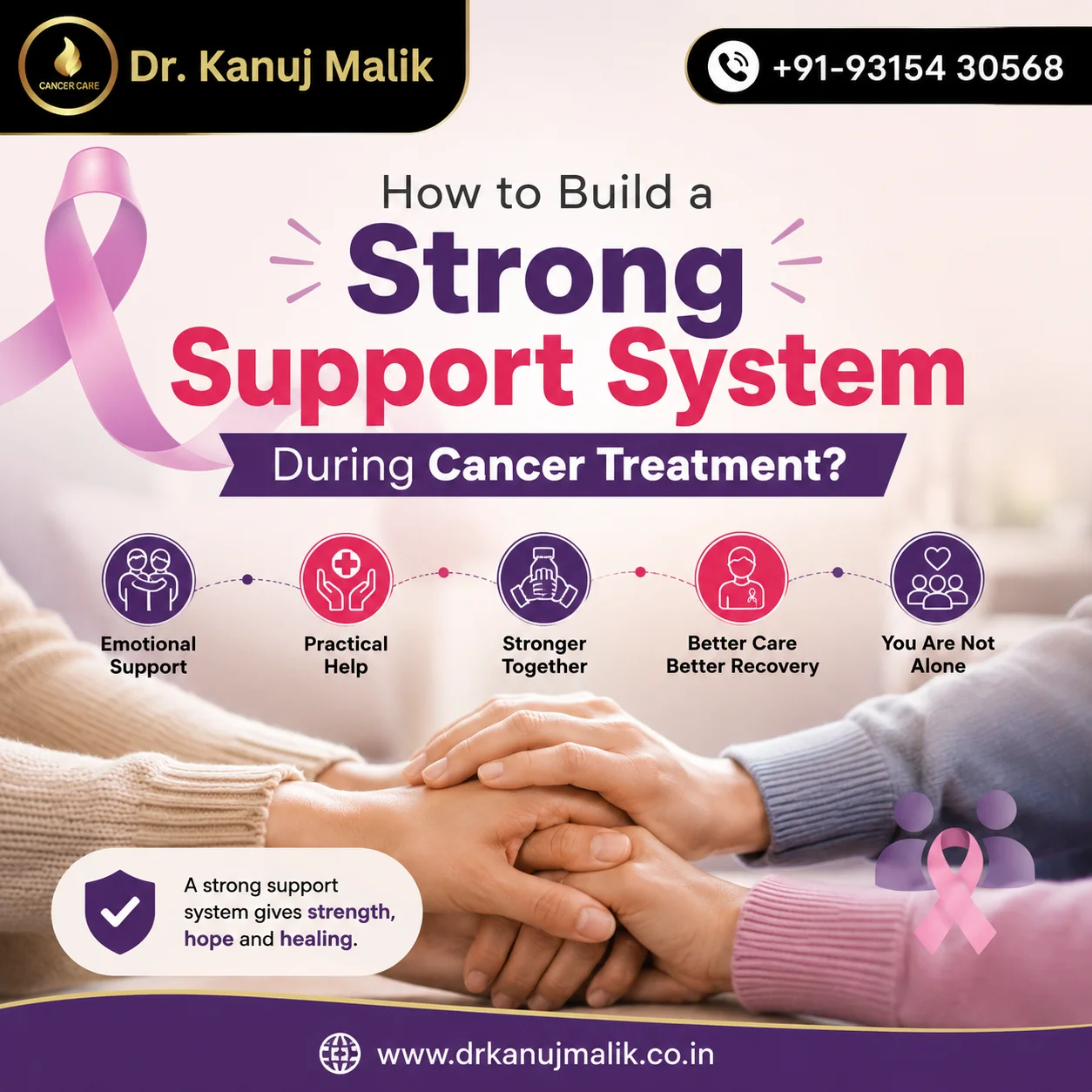
What Is a Cancer Support System?
A Cancer Support System is a group of people and healthcare professionals who help a patient throughout diagnosis, treatment, recovery, and follow-up care. Their support goes beyond medical treatment. They also help reduce stress, improve communication, and make daily life easier.
A strong Cancer Support System usually includes:
- Family members
- Close friends
- Cancer specialists and surgeons
- Oncology nurses
- Dietitians
- Psychologists or counsellors
- Caregivers
- Cancer survivor support groups
- Employers and colleagues
Every person plays a different role. Together, they help patients stay physically and emotionally stronger during treatment.
Why Is a Strong Cancer Support System Important?
Medical treatment is only one part of cancer care. Emotional well-being, proper nutrition, practical help, and positive communication also influence recovery.
A well-planned Cancer Support System can help patients:
- Feel less isolated and anxious.
- Attend medical appointments regularly.
- Take medicines on time.
- Manage treatment side effects more effectively.
- Follow healthy nutrition plans.
- Reduce stress and depression.
- Maintain hope and confidence during treatment.
Good nutrition is another important part of recovery. Following healthy eating habits during treatment can improve energy levels and support healing. Read our guide on nutrition tips during chemotherapy and radiation therapy to understand how food choices can make treatment more manageable.
A strong support network also encourages patients to ask questions, understand treatment options, and seek an importance of a second opinion in cancer diagnosis and treatment whenever necessary. This helps patients make informed healthcare decisions with greater confidence.
Who Should Be Part of Your Cancer Support System?
A strong Cancer Support System is built by involving the right people. Every member provides a different type of support. This reduces the burden on a single caregiver and ensures patients receive help in every aspect of treatment.
| Support Member | How They Help |
|---|---|
| Family Members | Emotional support, daily care, and medication reminders. |
| Friends | Transportation, companionship, and practical assistance. |
| Oncologist & Surgeon | Treatment planning and medical guidance. |
| Dietitian | Personalized nutrition advice during treatment. |
| Psychologist | Managing anxiety, stress, and depression. |
| Support Groups | Sharing experiences and emotional encouragement. |
| Employer | Flexible work schedules and workplace support. |
No single person can manage everything. Dividing responsibilities makes the Cancer Support System more effective and reduces caregiver stress.
How to Build a Strong Cancer Support System
Building a reliable Cancer Support System takes planning and open communication. Small steps can make a big difference during treatment.
1. Communicate Your Needs Clearly
Family and friends may want to help but may not know what you need. Speak openly about your concerns. Tell them if you need help with meals, transportation, medicines, or emotional support.
2. Accept Help Without Feeling Guilty
Many patients hesitate to ask for help. Accepting support is a sign of strength, not weakness. Allow loved ones to share responsibilities. This helps reduce physical and emotional stress.
3. Assign Specific Responsibilities
Instead of asking one person to manage everything, divide daily tasks.
- One family member can manage hospital appointments.
- Another can help with medicines.
- A friend can assist with transportation.
- Someone else can prepare healthy meals.
- Another person can help with insurance paperwork.
This organized approach creates a dependable Cancer Support System throughout treatment.
4. Stay Connected With Your Medical Team
Regular communication with your oncologist helps you understand treatment progress and possible side effects. Ask questions during every visit. Keep a notebook of symptoms and concerns.
Patients planning surgery should also understand available treatment options. Learn more about the benefits of surgical oncology and the types of cancer treated with surgical oncology to make informed treatment decisions.
5. Join a Cancer Support Group
Connecting with people facing similar challenges can reduce fear and loneliness. Support groups provide emotional encouragement, practical advice, and hope from people who understand the cancer journey.
You can also read our detailed guide on the role of support groups in healing from cancer to understand how these communities improve emotional well-being and recovery.
How Family and Friends Can Strengthen a Cancer Support System?
Family and friends are the foundation of a strong Cancer Support System. Their support helps patients feel safe, understood, and motivated throughout treatment.
Ways Family Members Can Help
- Listen patiently without interrupting.
- Attend doctor appointments when possible.
- Help manage medicines and medical records.
- Prepare healthy meals.
- Assist with household responsibilities.
- Respect the patient’s privacy and emotions.
- Encourage rest without forcing decisions.
How Friends Can Make a Difference?
- Offer transportation for hospital visits.
- Help with grocery shopping.
- Stay connected through regular calls or messages.
- Spend quality time together.
- Provide practical help instead of only giving advice.
Simple acts of kindness often provide emotional strength. A dependable Cancer Support System reminds patients that they do not have to face treatment alone.
Support at Every Stage of Cancer Treatment
The needs of a patient change throughout the cancer journey. A flexible Cancer Support System should adapt at every stage.
| Treatment Stage | Support Needed |
|---|---|
| Diagnosis | Emotional reassurance and accurate medical information. |
| Treatment Planning | Decision-making support and appointment scheduling. |
| Chemotherapy or Radiation | Nutrition, transportation, and side-effect management. |
| Surgery | Hospital care, recovery assistance, and wound care support. |
| Recovery | Physical activity, healthy lifestyle, and emotional encouragement. |
| Follow-up Care | Regular screenings and long-term health monitoring. |
Patients recovering from surgery can also benefit from our guide on living after cancer surgery, which explains lifestyle changes that support long-term recovery.
Taking Care of Mental and Emotional Health
Cancer affects emotional health as much as physical health. Anxiety, fear, sadness, and uncertainty are common during treatment. A complete Cancer Support System should include emotional care along with medical treatment.
Patients should never hesitate to seek professional counselling if emotional stress becomes overwhelming. Talking to a psychologist or counsellor can improve coping skills and reduce feelings of isolation.
Helpful ways to protect emotional well-being include:
- Practice meditation or deep breathing.
- Maintain a daily routine.
- Stay physically active as advised by your doctor.
- Share your feelings with trusted people.
- Celebrate small milestones during treatment.
- Join local or online cancer communities.
Regular physical activity also supports recovery. Learn more about the role of exercise in improving cancer survival rates and how safe movement can improve physical and emotional health during recovery.
Patients facing emotional challenges after diagnosis may also find helpful guidance in our article on managing emotional health during the cancer journey.
Supporting the Caregiver
Caregivers are an essential part of every Cancer Support System. They often balance hospital visits, household responsibilities, work, and emotional support. Over time, this can lead to caregiver burnout.
Family members should also care for the caregiver by sharing responsibilities, encouraging regular breaks, and offering emotional support. A healthy caregiver can provide better care throughout the treatment journey.
“`html id=”v8kp4m”
Common Mistakes That Can Weaken a Cancer Support System
Even with good intentions, family members and friends may unknowingly make mistakes. Avoiding these can make a Cancer Support System more effective.
- Giving medical advice without consulting the oncologist.
- Forcing the patient to stay positive all the time.
- Ignoring emotional concerns.
- Comparing one patient’s experience with another.
- Taking complete control without asking the patient’s preferences.
- Failing to communicate openly.
- Neglecting the caregiver’s physical and emotional health.
Signs That You Need a Stronger Cancer Support System
Some patients hesitate to ask for help. However, certain signs indicate that additional support is needed.
- You frequently miss medical appointments.
- You struggle to manage medicines.
- You feel isolated or emotionally exhausted.
- Daily household tasks become difficult.
- You experience ongoing stress or anxiety.
- You have no one to discuss treatment decisions with.
- Your nutrition or sleep has become poor.
If you notice these challenges, strengthen your Cancer Support System by involving family members, healthcare professionals, counsellors, and cancer support groups.
Expert Advice from Dr. Kanuj Malik
According to Dr. Kanuj Malik, building a reliable Cancer Support System is an important part of comprehensive cancer care. Medical treatment works best when patients also receive emotional encouragement, nutritional guidance, practical assistance, and continuous communication with their healthcare team.
Dr. Malik encourages patients and families to stay informed, ask questions, and participate actively in treatment decisions. Modern cancer care combines advanced medical treatments with compassionate support to improve both recovery and quality of life.
Reviewed by Dr. Kanuj Malik
Dr. Kanuj Malik
Cancer Surgeon
Phone: +91 93154 30568
Clinic Address:
Shop No. 143, 1st Floor, Cleo Street, Near Cleo County, Sector 121, Basi Bahuddin Nagar, Noida, Uttar Pradesh – 201301
Frequently Asked Questions
What is a Cancer Support System?
A Cancer Support System is a network of family members, friends, healthcare professionals, caregivers, and support groups that helps patients manage the emotional, physical, and practical challenges of cancer treatment.
Why is a Cancer Support System important during treatment?
A strong Cancer Support System helps reduce stress, improves treatment adherence, supports emotional well-being, and makes daily life more manageable during cancer care.
Can support groups help cancer patients?
Yes. Cancer support groups allow patients to connect with others facing similar experiences. They provide emotional encouragement, practical advice, and reduce feelings of isolation.
How can family members support a cancer patient?
Family members can help by attending medical appointments, preparing nutritious meals, managing medicines, listening without judgment, and providing emotional reassurance throughout treatment.
When should someone seek professional emotional support?
If anxiety, depression, stress, or emotional distress begins to interfere with daily life or treatment, speaking with a psychologist or counsellor is highly recommended.
Conclusion
Building a strong Cancer Support System is not just about receiving help. It is about creating a trusted network that supports every stage of the cancer journey. Family members, friends, caregivers, healthcare professionals, and support groups all contribute to better emotional health and improved treatment outcomes.
Along with medical care, healthy nutrition, emotional well-being, regular physical activity, and open communication play an important role in recovery. Staying informed also helps patients make confident decisions. You can learn more about how immunotherapy is changing cancer treatment in India and the growing role of AI and technology in cancer diagnosis to better understand the latest advancements in cancer care.
If you or a loved one needs expert guidance for cancer diagnosis, treatment, or recovery planning, consult Dr. Kanuj Malik for personalized care and evidence-based treatment recommendations.