
Receiving a cancer diagnosis can change your life in a few moments. It affects not only your physical health but also your emotional well-being. Every person reacts differently. Some people feel shocked. Others feel scared, angry, confused, or overwhelmed. These reactions are normal. Understanding the emotional stages of cancer diagnosis can help patients and families cope better.
The emotional stages of cancer diagnosis do not always happen in the same order. Some emotions may return during treatment or recovery. Accepting your feelings and seeking support can make the journey easier.
If you notice early signs of cancer, timely diagnosis and emotional support are equally important for better outcomes.
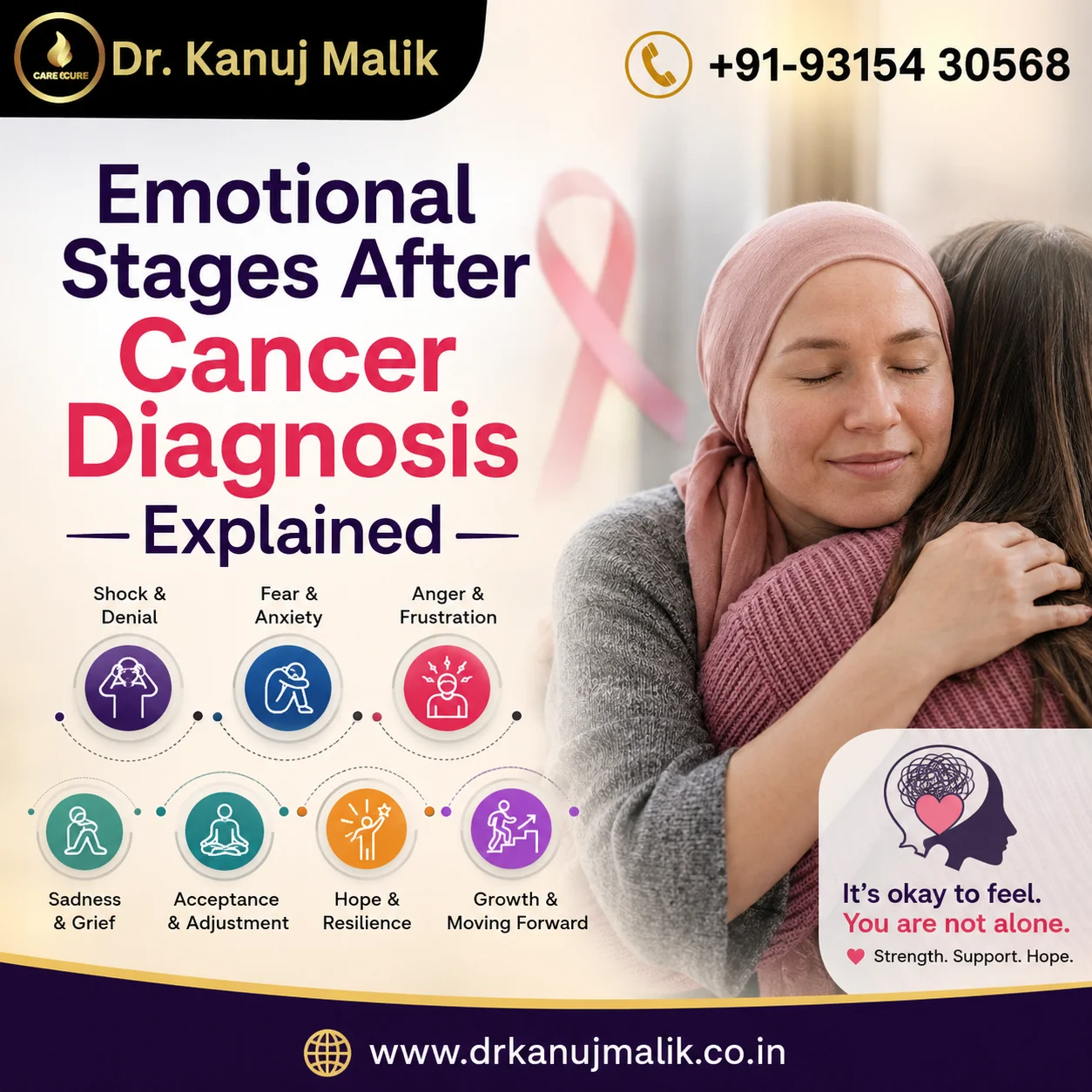
Why Does a Cancer Diagnosis Cause Strong Emotions?
A cancer diagnosis often creates uncertainty. Questions about treatment, recovery, work, finances, and family may appear immediately. The brain responds to this uncertainty by triggering stress hormones. This can affect sleep, concentration, appetite, and mood.
Many patients worry about:
- The success of treatment.
- Physical changes.
- Financial responsibilities.
- Family members.
- The future.
These concerns are common. Understanding the emotional stages of cancer diagnosis helps patients realize they are not alone.
Emotional Timeline After a Cancer Diagnosis
| Time | Common Emotional Response |
|---|---|
| First 24 Hours | Shock, disbelief, numbness. |
| First Week | Fear, anxiety, confusion. |
| First Month | Anger, sadness, emotional ups and downs. |
| During Treatment | Hope mixed with stress and fatigue. |
| Recovery | Acceptance, confidence, fear of recurrence. |
Remember that every person’s journey is unique. The emotional stages of cancer diagnosis may repeat at different points during treatment.
1. Shock and Denial
Shock is usually the first emotional response. Many people struggle to believe the diagnosis. Some feel emotionally numb. Others find it difficult to remember conversations with their doctor.
During this stage, patients may think:
- “This cannot be happening.”
- “The reports must be wrong.”
- “I feel completely normal.”
This reaction protects the mind from overwhelming stress. As more information becomes available, denial usually starts fading.
2. Fear and Anxiety
Fear is one of the most common emotional stages of cancer diagnosis. Patients may worry about treatment, surgery, chemotherapy, radiation therapy, or survival.
Common symptoms include:
- Difficulty sleeping.
- Racing thoughts.
- Fast heartbeat.
- Poor concentration.
- Constant worrying.
Learning about the treatment plan often helps reduce anxiety. Reading reliable information and discussing concerns with your cancer specialist can also improve confidence.
If surgery is recommended, understanding the role of an experienced surgical oncologist in Noida can help patients make informed decisions.
3. Anger and Frustration
As reality becomes clearer, many patients experience anger. They may ask, “Why me?” or feel frustrated about changes in daily life.
Anger may be directed toward:
- The illness.
- Treatment side effects.
- Life interruptions.
- Work responsibilities.
- Family situations.
These feelings are normal. Healthy ways to manage anger include walking, journaling, meditation, or talking with a counsellor.
4. Sadness and Grief
Many patients grieve the life they had before cancer. They may feel emotional after changes in routine, appearance, or physical strength.
Sadness becomes concerning if it continues for several weeks and begins affecting daily life.
Warning signs include:
- Persistent hopelessness.
- Loss of interest in daily activities.
- Changes in sleep.
- Poor appetite.
- Difficulty enjoying life.
Emotional support from family and healthcare professionals can make a significant difference during this stage.
Emotional Changes Are Not the Same for Everyone
One important fact many people do not realize is that the emotional stages of cancer diagnosis are not linear. A patient may feel hopeful one day and anxious the next. This is completely normal.
Age, cancer type, treatment plan, personal experiences, family support, and overall health all influence emotional recovery.
Patients diagnosed after routine screening may react differently than those diagnosed after experiencing symptoms. Learning about modern diagnostic methods, including biopsy in cancer diagnosis, often helps patients better understand their condition.
5. Acceptance and Emotional Adjustment
Acceptance does not mean you are happy about the diagnosis. It means you are ready to focus on treatment and recovery. This stage is an important part of the emotional stages of cancer diagnosis.
Patients often begin to:
- Understand their treatment plan.
- Ask informed questions.
- Build healthy daily routines.
- Take an active role in their recovery.
- Feel more confident about the future.
Acceptance takes time. Some people reach this stage within weeks, while others need several months. Both experiences are completely normal.
6. Hope and Resilience
Hope plays a powerful role during cancer treatment. It does not ignore challenges. Instead, it helps patients focus on the next step. Many people discover new strength through family support, medical care, and positive lifestyle changes.
Building resilience may include:
- Celebrating small treatment milestones.
- Maintaining realistic expectations.
- Following medical advice.
- Practicing relaxation techniques.
- Connecting with support groups.
Understanding the emotional stages of cancer diagnosis reminds patients that emotional healing is just as important as physical recovery.
Healthy Ways to Cope With the Emotional Stages of Cancer Diagnosis
There is no perfect way to manage emotions after a cancer diagnosis. However, healthy coping strategies can improve emotional well-being.
- Talk openly with your doctor.
- Share your feelings with trusted family members.
- Join a cancer support group.
- Practice meditation or deep breathing.
- Eat a balanced diet.
- Stay physically active as advised by your doctor.
- Get enough sleep every night.
- Keep a daily journal.
Good nutrition also supports both physical and emotional recovery. Read these nutrition tips during chemotherapy and radiation therapy to help maintain strength throughout treatment.
Unhealthy Coping Behaviors to Avoid
Some coping habits provide temporary relief but may worsen emotional stress.
- Ignoring the diagnosis.
- Social isolation.
- Alcohol or substance misuse.
- Avoiding medical appointments.
- Searching unreliable health information online.
Seeking professional support early can prevent emotional distress from becoming overwhelming.
How Family Members Can Provide Emotional Support?
Family members also experience emotional stress after a loved one receives a cancer diagnosis. Their support can make a meaningful difference.
Helpful ways to support a patient include:
- Listen without judging.
- Attend doctor appointments together.
- Help with daily responsibilities.
- Respect the patient’s emotions.
- Encourage healthy routines.
- Stay positive without creating unrealistic expectations.
Many families also benefit from joining a cancer support group, where they can learn practical coping techniques and connect with others facing similar challenges.
When Should You Seek Professional Emotional Support?
Professional mental health support is recommended if emotional symptoms continue for several weeks or interfere with daily life.
Consult your healthcare team if you experience:
- Persistent sadness.
- Frequent panic attacks.
- Severe anxiety.
- Loss of motivation.
- Difficulty sleeping for several weeks.
- Thoughts of self-harm or hopelessness.
Psychologists, counsellors, psycho-oncology specialists, and psychiatrists can provide effective emotional support throughout treatment.
Expert Guidance From Dr. Kanuj Malik
Cancer care involves much more than surgery or medication. Emotional health also deserves attention. Dr. Kanuj Malik, an experienced cancer specialist, believes that educating patients and encouraging open communication helps reduce fear and improves confidence during treatment.
Patients seeking expert cancer care can consult Dr. Kanuj Malik at:
Address: Shop No. 143, 1st Floor, Cleo Street, Near Cleo County, Sector 121, Noida, Basi Bahuddin Nagar, Uttar Pradesh – 201301
Phone: +91-93154 30568
Learn more about comprehensive cancer treatment by visiting Dr. Kanuj Malik’s cancer care services.
Frequently Asked Questions
How long do the emotional stages of cancer diagnosis last?
Every patient is different. Some people adjust within weeks, while others need several months. Emotional healing has no fixed timeline.
Is anxiety normal after a cancer diagnosis?
Yes. Anxiety is one of the most common emotional reactions. Learning about your treatment plan and discussing concerns with your doctor can help reduce anxiety.
Can emotional stress affect cancer treatment?
Long-term stress may affect sleep, appetite, and overall quality of life. Managing emotional health supports better recovery and treatment adherence.
Should I see a counsellor after a cancer diagnosis?
If emotional distress becomes overwhelming or affects daily activities, speaking with a mental health professional is strongly recommended.
Conclusion
The emotional stages of cancer diagnosis are a natural response to a life-changing event. Shock, fear, anger, sadness, acceptance, and hope may all become part of the journey.
Every experience is unique. There is no right or wrong way to feel. With timely medical care, emotional support, healthy coping strategies, and guidance from experienced specialists, patients can face treatment with greater confidence and resilience.