
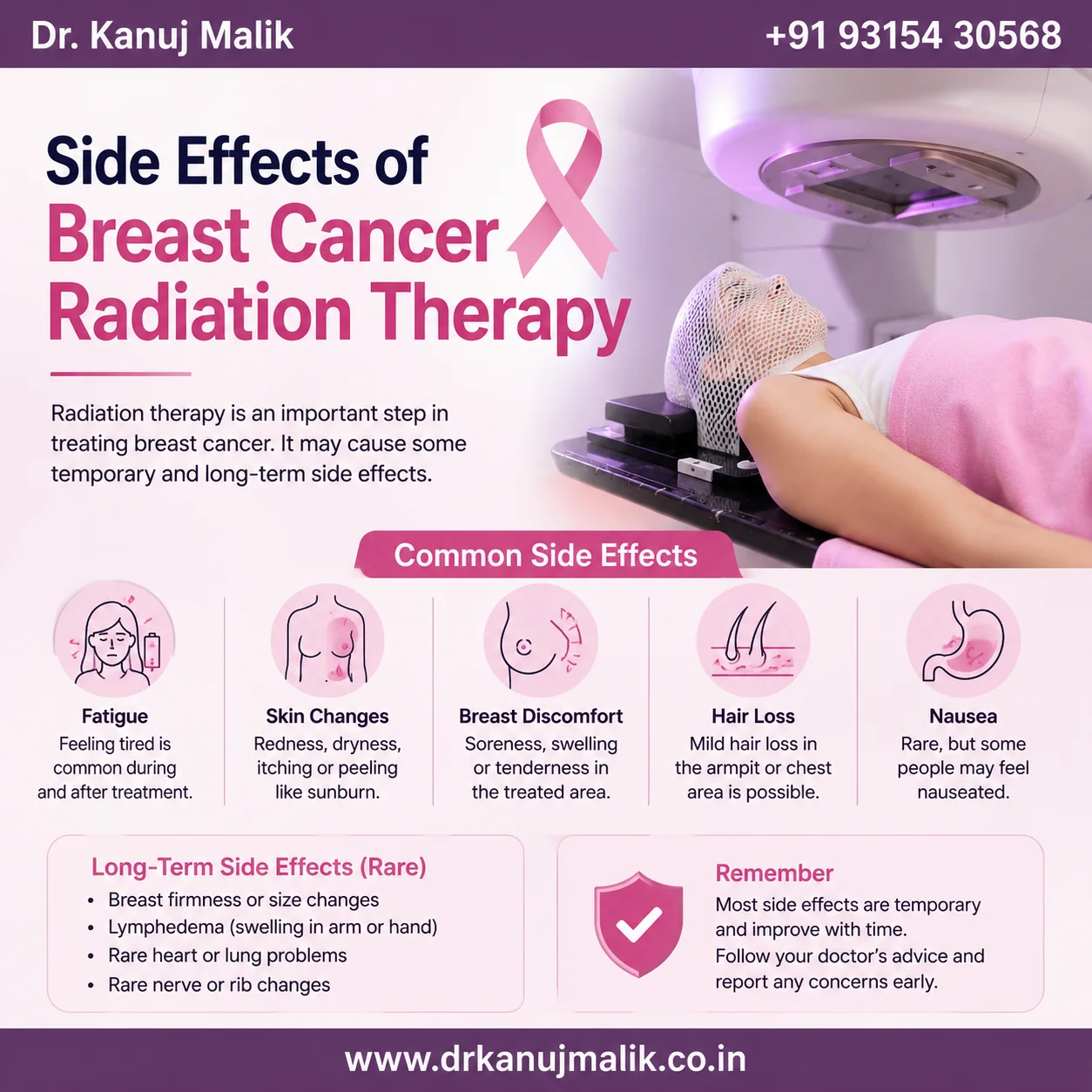
Radiation therapy is one of the most effective treatments for breast cancer. It uses high-energy rays to destroy cancer cells that may remain after surgery. It can also reduce the risk of cancer returning. Most people complete treatment without serious complications. However, breast cancer radiation side effects can occur because nearby healthy cells are also exposed to radiation.
Most side effects are temporary. They improve within a few weeks after treatment ends. Some changes may appear months or years later. Knowing what to expect can help you manage symptoms and seek medical advice when needed.
If you have recently noticed early signs of breast cancer, discussing your treatment options with a cancer specialist is important.
How Radiation Therapy Works?
Radiation therapy targets cancer cells using carefully planned high-energy beams. These beams damage the DNA inside cancer cells, making it difficult for them to grow or divide. Healthy cells near the treatment area may also be affected, but they usually recover over time.
Because normal tissues need time to heal, some breast cancer radiation side effects develop gradually during treatment instead of appearing immediately.
When Do Radiation Side Effects Start?
| Time | Possible Changes |
|---|---|
| Week 1 | Mild redness or warmth in the treated area |
| Week 2–3 | Fatigue and increasing skin irritation |
| Week 3–5 | Dryness, itching, or peeling skin |
| 2–6 Weeks After Treatment | Most short-term symptoms begin to improve |
| Months Later | Breast firmness or mild skin color changes |
| Years Later | Rare long-term complications in some patients |
Common Short-Term Breast Cancer Radiation Side Effects
1. Skin Redness and Irritation
Skin changes are among the most common breast cancer radiation side effects. The treated skin may look similar to a mild sunburn.
Symptoms may include:
- Redness
- Dryness
- Itching
- Tenderness
- Darkening of the skin
- Peeling in skin folds
This happens because radiation temporarily affects fast-growing skin cells.
Self-care tips
- Use only creams recommended by your radiation team.
- Wear loose cotton clothing.
- Avoid hot water on the treated area.
- Protect the skin from direct sunlight.
- Do not scratch irritated skin.
2. Breast Pain or Swelling
The treated breast may become sore or swollen during treatment. Some people notice increased sensitivity for several weeks.
Mild discomfort often improves with time. Persistent pain should be discussed with your doctor.
You can also read our guide on managing breast pain for additional self-care advice.
3. Fatigue
Fatigue is another common breast cancer radiation side effect. It may begin after the first few treatment sessions and continue for several weeks after therapy ends.
Unlike normal tiredness, fatigue may not completely improve with rest.
Simple measures may help.
- Take short walks.
- Sleep well at night.
- Drink enough water.
- Eat balanced meals.
- Avoid overexertion.
4. Mild Hair Loss
Radiation therapy for breast cancer does not cause hair loss on the scalp. However, hair in the underarm or chest area receiving radiation may become thinner or fall out temporarily.
5. Mild Changes in Breast Shape
Some swelling during treatment can make the breast feel heavier or slightly larger. This usually improves after treatment finishes.
Who Is More Likely to Develop Side Effects?
The severity of breast cancer radiation side effects varies from person to person.
Factors that may increase the risk include:
- Large breast size
- Smoking
- Diabetes
- Obesity
- Previous radiation treatment
- Certain connective tissue disorders
- Receiving chemotherapy along with radiation
Maintaining a healthy lifestyle before and during treatment may support recovery. You may also find our article on lifestyle changes to reduce breast cancer risk helpful.
How Serious Are Radiation Side Effects?
| Symptom | Usually Mild | Needs Medical Review |
|---|---|---|
| Skin redness | ✔ | If blistering develops |
| Fatigue | ✔ | If severe or worsening |
| Breast swelling | ✔ | If rapidly increasing |
| Skin peeling | Sometimes | If open wounds appear |
| Shortness of breath | ✖ | Seek prompt medical evaluation |
Daily Skin Care During Radiation Therapy
- Wash gently with lukewarm water.
- Use mild soap if approved by your care team.
- Pat the skin dry.
- Avoid perfumes on the treated area.
- Wear soft bras if comfortable.
- Avoid heating pads and ice packs unless advised.
- Do not apply creams just before a radiation session unless instructed.
Myth vs Fact
Myth: Radiation therapy makes you radioactive.
Fact: External beam radiation does not make your body radioactive. It is safe to be around family members, including children and pets, after each treatment session.
Myth: Every patient develops severe skin burns.
Fact: Most patients experience mild to moderate skin irritation that improves after treatment with proper skin care.
Long-Term Breast Cancer Radiation Side Effects
Most people recover well after treatment. However, some breast cancer radiation side effects may appear months or even years later. Regular follow-up visits help detect these changes early.
1. Breast Firmness or Size Changes
The treated breast may feel firmer because scar tissue develops during healing. Some people notice the breast becomes slightly smaller or changes shape. These changes are usually permanent but often mild.
If you are recovering after surgery, our guide on breast cancer surgery recovery may also be helpful.
2. Lymphedema
Lymphedema is swelling caused by poor lymph fluid drainage. The risk increases if lymph nodes are removed during surgery and radiation is also given to the underarm.
Symptoms include:
- Arm swelling
- Hand swelling
- Heaviness in the arm
- Tightness of the skin
- Reduced arm movement
Early treatment can improve symptom control.
3. Rare Heart and Lung Problems
Modern radiation techniques have greatly reduced these risks. In a small number of patients, especially after treatment on the left side of the chest, radiation may affect nearby organs.
Rare complications include:
- Radiation pneumonitis
- Persistent dry cough
- Shortness of breath
- Rare heart complications
These problems are uncommon and should be evaluated promptly if symptoms develop.
4. Rare Nerve or Bone Changes
Very rarely, radiation can affect nearby nerves or ribs. This may lead to long-term pain, weakness, or a rib fracture. Modern treatment planning has made these complications uncommon.
Recovery Timeline After Radiation Therapy
| Recovery Period | Expected Changes |
|---|---|
| First 2 Weeks | Fatigue and redness may continue. |
| 2–6 Weeks | Skin gradually heals. |
| 1–3 Months | Swelling continues to improve. |
| 3–6 Months | Breast tissue settles. |
| Beyond 6 Months | Most patients return to normal daily activities. |
Foods That Support Recovery
A balanced diet can support healing during and after radiation therapy.
- Lean protein such as eggs, fish, paneer, and pulses.
- Fresh fruits rich in vitamin C.
- Green vegetables.
- Whole grains.
- Healthy fats from nuts and seeds.
- Plenty of water and other fluids.
Good nutrition also helps reduce fatigue during treatment. You may also find our article on nutrition during chemotherapy and radiation therapy useful.
Exercise and Emotional Well-Being
Light physical activity can improve energy levels and reduce stiffness. Walking and gentle stretching are suitable for many patients after medical approval.
Some people also experience anxiety, poor sleep, or fear during treatment. Speaking with family members, joining support groups, or talking to a healthcare professional may help.
Modern Radiation Therapy Has Improved Safety
Today’s radiation therapy is more precise than older techniques.
Depending on your treatment plan, your oncology team may use:
- 3D Conformal Radiation Therapy (3D-CRT)
- Intensity-Modulated Radiation Therapy (IMRT)
- Image-Guided Radiation Therapy (IGRT)
- Deep Inspiration Breath Hold (DIBH)
- Hypofractionated radiation schedules
These techniques help reduce radiation exposure to healthy tissues. Learn more about hypofractionated radiation therapy.
When Should You Contact Your Doctor?
Seek medical advice if you experience:
- High fever
- Open skin wounds
- Severe breast swelling
- Persistent bleeding
- Chest pain
- Difficulty breathing
- Continuous dry cough
- Rapid arm swelling
About Dr. Kanuj Malik
Dr. Kanuj Malik is a Surgical Oncologist with 14 years of experience in cancer care. He completed his MBBS and MS in General Surgery from Maulana Azad Medical College and Lok Nayak Hospital. He later earned an MCh in Surgical Oncology from the Cancer Institute (WIA), Adyar, Chennai.
His clinical expertise includes breast cancer treatment, head and neck cancers, gastrointestinal cancers, gynecological cancers, genitourinary cancers, and musculoskeletal cancers. He has also served as Assistant Professor in Surgical Oncology at the Cancer Institute (WIA) and worked as Consultant Surgical Oncologist at leading hospitals in Delhi NCR.
Clinic Address:
Shop No. 143, 1st Floor, Cleo Street,
Near Cleo County, Sector 121,
Noida, Uttar Pradesh 201301
Phone: 093154 30568
Google Maps:
View Clinic Location
You can also learn more about Dr. Kanuj Malik or book a consultation with a Surgical Oncologist in Noida.
Frequently Asked Questions
How long do breast cancer radiation side effects last?
Most short-term side effects improve within a few weeks after treatment ends. Some tissue changes may take several months to settle.
Does everyone develop severe radiation side effects?
No. Many people experience only mild skin irritation or fatigue. Serious complications are uncommon with modern radiation therapy.
Can I work during radiation therapy?
Many patients continue working, especially if symptoms remain mild. Fatigue may require adjustments to daily activities.
Will radiation therapy make me radioactive?
No. External beam radiation does not make your body radioactive. It is safe to spend time with family and friends after treatment.
Can exercise help during recovery?
Yes. Light exercise, such as walking, may improve energy levels, reduce stiffness, and support overall recovery after approval from your treating doctor.
Conclusion
Breast cancer radiation side effects are usually temporary and manageable. Skin irritation, fatigue, and breast tenderness are the most common symptoms. Serious long-term complications are uncommon because modern radiation techniques are highly precise.
Following your treatment team’s instructions, maintaining healthy habits, and reporting new symptoms early can support a smoother recovery and improve overall quality of life.