
Metastatic Breast Cancer Symptoms develop when breast cancer spreads beyond the breast and nearby lymph nodes to other parts of the body. This condition is also called Stage 4 breast cancer or secondary breast cancer. The cancer most commonly spreads to the bones, lungs, liver, or brain.
Many people notice Metastatic Breast Cancer Symptoms months or even years after completing their initial treatment. The symptoms may be mild at first and are often mistaken for common health problems. Recognizing persistent changes and seeking medical advice early can help doctors identify the cause and start appropriate treatment without unnecessary delays.
What Is Metastatic Breast Cancer?
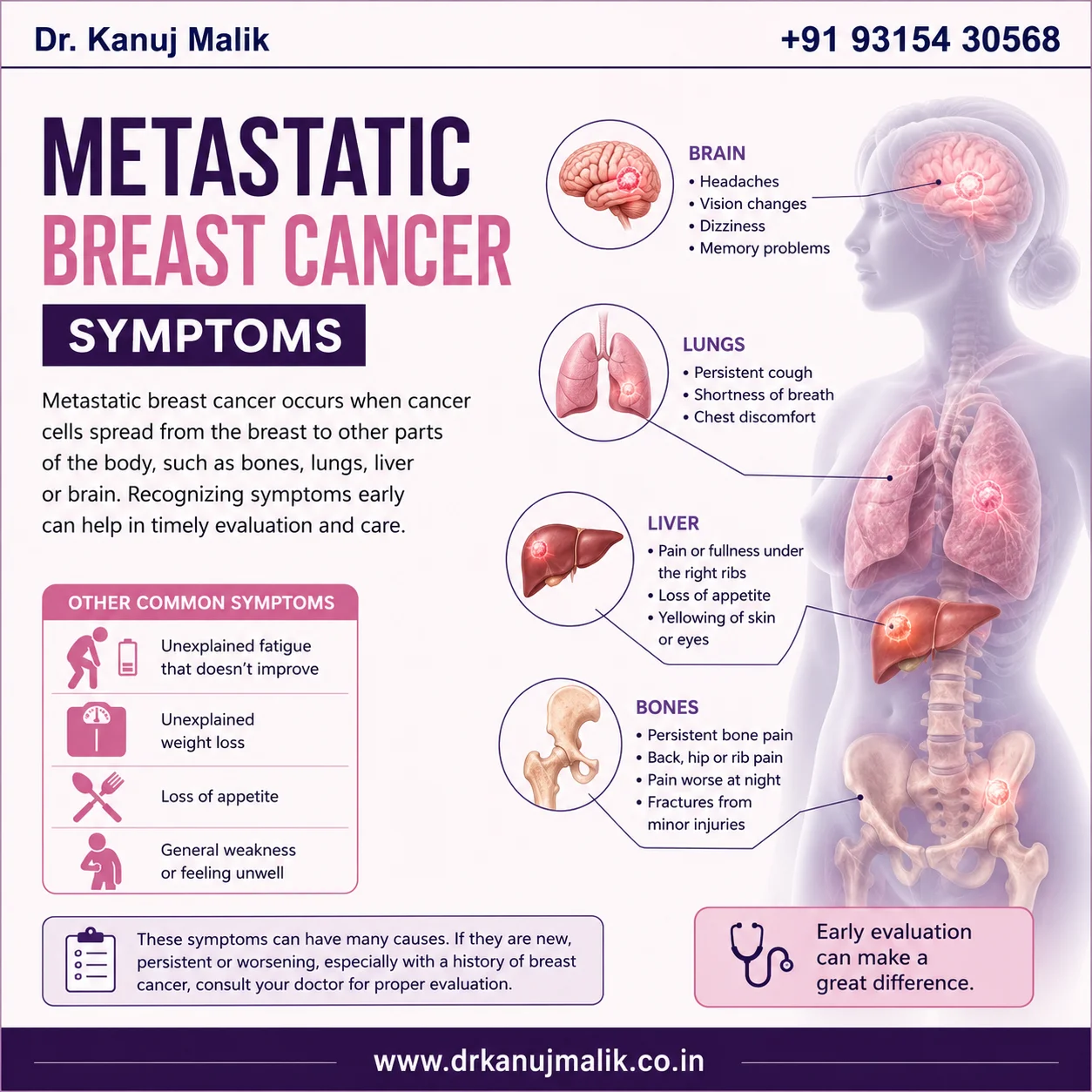
Metastatic breast cancer occurs when cancer cells break away from the original breast tumor and travel through the bloodstream or lymphatic system. These cells settle in other organs and begin growing there.
It is different from a local recurrence. A local recurrence develops in the breast or nearby tissues. Metastatic disease affects distant organs. Although it is considered an advanced stage of breast cancer, many treatment options can help control the disease, manage symptoms, and improve quality of life.
If you would like to understand the early warning signs of breast cancer, you can also read Symptoms and Early Warning Signs of Breast Cancer.
Why Metastatic Breast Cancer Symptoms Are Easy to Miss
Many early symptoms are not specific to cancer. A dull backache may feel like muscle strain. Fatigue may be blamed on stress. A cough may seem like a seasonal infection.
These symptoms usually become more important when they:
- Last for more than two weeks.
- Keep getting worse.
- Appear without a clear reason.
- Do not improve with rest or routine treatment.
- Occur in someone with a history of breast cancer.
Early Metastatic Breast Cancer Symptoms
The first signs vary from one person to another. Some people have only one symptom, while others develop several changes over time.
- Persistent tiredness that does not improve with rest.
- Unexplained weight loss.
- Reduced appetite.
- Constant bone or joint pain.
- Persistent cough.
- Shortness of breath.
- Frequent headaches.
- Weakness or reduced energy levels.
These symptoms do not always mean cancer has spread. However, they should be evaluated if they continue or worsen.
Metastatic Breast Cancer Symptoms by Body Area
1. Bone Metastasis Symptoms
The bones are the most common site for metastatic breast cancer.
- Persistent back pain.
- Hip pain.
- Rib pain.
- Pain that becomes worse at night.
- Bone fractures after minor injuries.
- Difficulty walking due to severe bone pain.
Bone pain that continues despite rest should not be ignored.
2. Lung Metastasis Symptoms
When breast cancer spreads to the lungs, breathing-related symptoms may develop.
- Cough lasting more than two or three weeks.
- Shortness of breath during routine activities.
- Chest discomfort.
- Chest pain.
- Occasional wheezing.
3. Liver Metastasis Symptoms
Liver involvement may not cause symptoms in the beginning. As the disease progresses, people may notice:
- Pain below the right ribs.
- Loss of appetite.
- Nausea.
- Yellowing of the skin or eyes.
- Abdominal swelling.
- Persistent tiredness.
4. Brain Metastasis Symptoms
Brain metastasis can affect the nervous system.
- New or worsening headaches.
- Blurred or double vision.
- Dizziness.
- Poor balance.
- Memory problems.
- Confusion.
- Seizures in some cases.
5. Local Symptoms Around the Breast or Chest Wall
Not every recurrence occurs in a distant organ. Some people first notice changes near the previous treatment area.
- A new lump in the breast or underarm.
- Thickening of the chest wall.
- Changes around a surgical scar.
- Persistent redness.
- Skin thickening.
- Swelling of the treated arm or hand.
If you discover a new breast lump, read New Breast Lump: Benign or Cancerous? to understand possible causes before your medical evaluation.
Who Should Pay Extra Attention?
Anyone can develop new health concerns. However, these symptoms deserve extra attention in people who have:
- A previous history of breast cancer.
- Completed breast cancer treatment in the past.
- A history of aggressive breast cancer.
- Breast cancer with lymph node involvement.
Regular follow-up appointments remain important even after successful treatment because some changes may appear years later.
How Doctors Diagnose Metastatic Breast Cancer
Metastatic Breast Cancer Symptoms can have many causes. Your doctor will review your medical history, perform a physical examination, and recommend tests based on your symptoms. The goal is to confirm if cancer has spread and identify the affected organs.
Physical Examination
Your doctor will check for new lumps, swollen lymph nodes, skin changes, pain, and any neurological or breathing problems.
Imaging Tests
- CT Scan: Helps detect cancer in the lungs, liver, and other organs.
- MRI: Commonly used for evaluating the brain and spinal cord.
- PET-CT Scan: Shows areas of active cancer throughout the body.
- Bone Scan: Detects cancer that has spread to the bones.
Learn more about PET Scan for Cancer Detection.
Biopsy
If imaging suggests metastatic disease, a biopsy may be recommended. It confirms the diagnosis and helps determine the most suitable treatment plan.
You may also find this guide helpful: Biopsy in Cancer Diagnosis.
Symptoms That Need Immediate Medical Attention
Some Metastatic Breast Cancer Symptoms require urgent medical evaluation.
- Sudden weakness in an arm or leg.
- Loss of balance or inability to walk.
- Severe headache that develops suddenly.
- Seizures.
- Confusion or difficulty speaking.
- Severe shortness of breath.
- Persistent chest pain.
- Loss of bladder or bowel control with severe back pain.
Do not wait for a routine appointment if these symptoms develop.
Treatment Options for Metastatic Breast Cancer
Treatment depends on the cancer subtype, organs involved, previous treatments, and your overall health. The aim is to control cancer, relieve symptoms, and maintain quality of life.
- Chemotherapy.
- Hormone therapy for hormone receptor-positive cancers.
- Targeted therapy.
- Immunotherapy for selected patients.
- Radiation therapy to relieve symptoms.
- Surgery in carefully selected situations.
- Pain management and supportive care.
- Bone-strengthening medicines for bone metastasis.
Read more about Targeted Therapy in Breast Cancer.
Can Metastatic Breast Cancer Be Cured?
Metastatic breast cancer is generally not considered curable. However, many people live for years with modern treatments. Advances in targeted therapy, hormone therapy, immunotherapy, and supportive care have improved disease control and quality of life.
Your treatment team will create a personalized plan based on your diagnosis and treatment goals.
Myths and Facts About Metastatic Breast Cancer
| Myth | Fact |
|---|---|
| Every back pain means cancer has spread. | Most back pain has non-cancer causes. Persistent or unusual pain should be evaluated. |
| Stage 4 breast cancer cannot be treated. | Many effective treatments help control the disease and improve quality of life. |
| Every breast cancer spreads. | Many breast cancers are treated successfully before they spread. |
Frequently Asked Questions
What is usually the first symptom of metastatic breast cancer?
Persistent bone pain, ongoing fatigue, unexplained weight loss, or a chronic cough are among the common early symptoms. The first symptom varies depending on the organ involved.
Can metastatic breast cancer develop years after treatment?
Yes. In some people, metastatic breast cancer can appear months or years after the initial treatment has been completed.
Is every persistent pain a sign of metastatic breast cancer?
No. Most persistent pain has causes unrelated to cancer. However, pain that continues, worsens, or occurs with other concerning symptoms should be assessed by a doctor.
Which organs are most commonly affected?
The bones, lungs, liver, and brain are the most common sites where breast cancer spreads.
When should I consult an oncologist?
You should seek medical advice if you notice persistent Metastatic Breast Cancer Symptoms, especially if you have a history of breast cancer. Early evaluation helps determine the cause and allows timely treatment if needed.
How Doctors Diagnose Metastatic Breast Cancer
Metastatic Breast Cancer Symptoms can have many causes. Your doctor will review your medical history, perform a physical examination, and recommend tests based on your symptoms. The goal is to confirm if cancer has spread and identify the affected organs.
Physical Examination
Your doctor will check for new lumps, swollen lymph nodes, skin changes, pain, and any neurological or breathing problems.
Imaging Tests
- CT Scan: Helps detect cancer in the lungs, liver, and other organs.
- MRI: Commonly used for evaluating the brain and spinal cord.
- PET-CT Scan: Shows areas of active cancer throughout the body.
- Bone Scan: Detects cancer that has spread to the bones.
Learn more about PET Scan for Cancer Detection.
Biopsy
If imaging suggests metastatic disease, a biopsy may be recommended. It confirms the diagnosis and helps determine the most suitable treatment plan.
You may also find this guide helpful: Biopsy in Cancer Diagnosis.
Symptoms That Need Immediate Medical Attention
Some Metastatic Breast Cancer Symptoms require urgent medical evaluation.
- Sudden weakness in an arm or leg.
- Loss of balance or inability to walk.
- Severe headache that develops suddenly.
- Seizures.
- Confusion or difficulty speaking.
- Severe shortness of breath.
- Persistent chest pain.
- Loss of bladder or bowel control with severe back pain.
Do not wait for a routine appointment if these symptoms develop.
Treatment Options for Metastatic Breast Cancer
Treatment depends on the cancer subtype, organs involved, previous treatments, and your overall health. The aim is to control cancer, relieve symptoms, and maintain quality of life.
- Chemotherapy.
- Hormone therapy for hormone receptor-positive cancers.
- Targeted therapy.
- Immunotherapy for selected patients.
- Radiation therapy to relieve symptoms.
- Surgery in carefully selected situations.
- Pain management and supportive care.
- Bone-strengthening medicines for bone metastasis.
Read more about Targeted Therapy in Breast Cancer.
Can Metastatic Breast Cancer Be Cured?
Metastatic breast cancer is generally not considered curable. However, many people live for years with modern treatments. Advances in targeted therapy, hormone therapy, immunotherapy, and supportive care have improved disease control and quality of life.
Your treatment team will create a personalized plan based on your diagnosis and treatment goals.
Myths and Facts About Metastatic Breast Cancer
| Myth | Fact |
|---|---|
| Every back pain means cancer has spread. | Most back pain has non-cancer causes. Persistent or unusual pain should be evaluated. |
| Stage 4 breast cancer cannot be treated. | Many effective treatments help control the disease and improve quality of life. |
| Every breast cancer spreads. | Many breast cancers are treated successfully before they spread. |
Frequently Asked Questions
What is usually the first symptom of metastatic breast cancer?
Persistent bone pain, ongoing fatigue, unexplained weight loss, or a chronic cough are among the common early symptoms. The first symptom varies depending on the organ involved.
Can metastatic breast cancer develop years after treatment?
Yes. In some people, metastatic breast cancer can appear months or years after the initial treatment has been completed.
Is every persistent pain a sign of metastatic breast cancer?
No. Most persistent pain has causes unrelated to cancer. However, pain that continues, worsens, or occurs with other concerning symptoms should be assessed by a doctor.
Which organs are most commonly affected?
The bones, lungs, liver, and brain are the most common sites where breast cancer spreads.
When should I consult an oncologist?
You should seek medical advice if you notice persistent Metastatic Breast Cancer Symptoms, especially if you have a history of breast cancer. Early evaluation helps determine the cause and allows timely treatment if needed.