
Precision Medicine in Cancer Treatment is changing the way doctors diagnose and treat cancer. Traditional cancer treatments often follow a similar approach for many patients. However, every cancer is unique. Even two people with the same type of cancer may have different genetic changes inside their tumor. Precision medicine helps doctors identify these differences and choose the most effective treatment.
Instead of relying only on the cancer’s location, doctors also study its genetic and molecular profile. This approach increases the chances of selecting therapies that are more effective while reducing unnecessary side effects.
If you are looking for expert cancer care, you can learn more about Dr. Kanuj Malik, an experienced surgical oncologist providing advanced cancer treatment in Noida.
What Is Precision Medicine in Cancer Treatment?
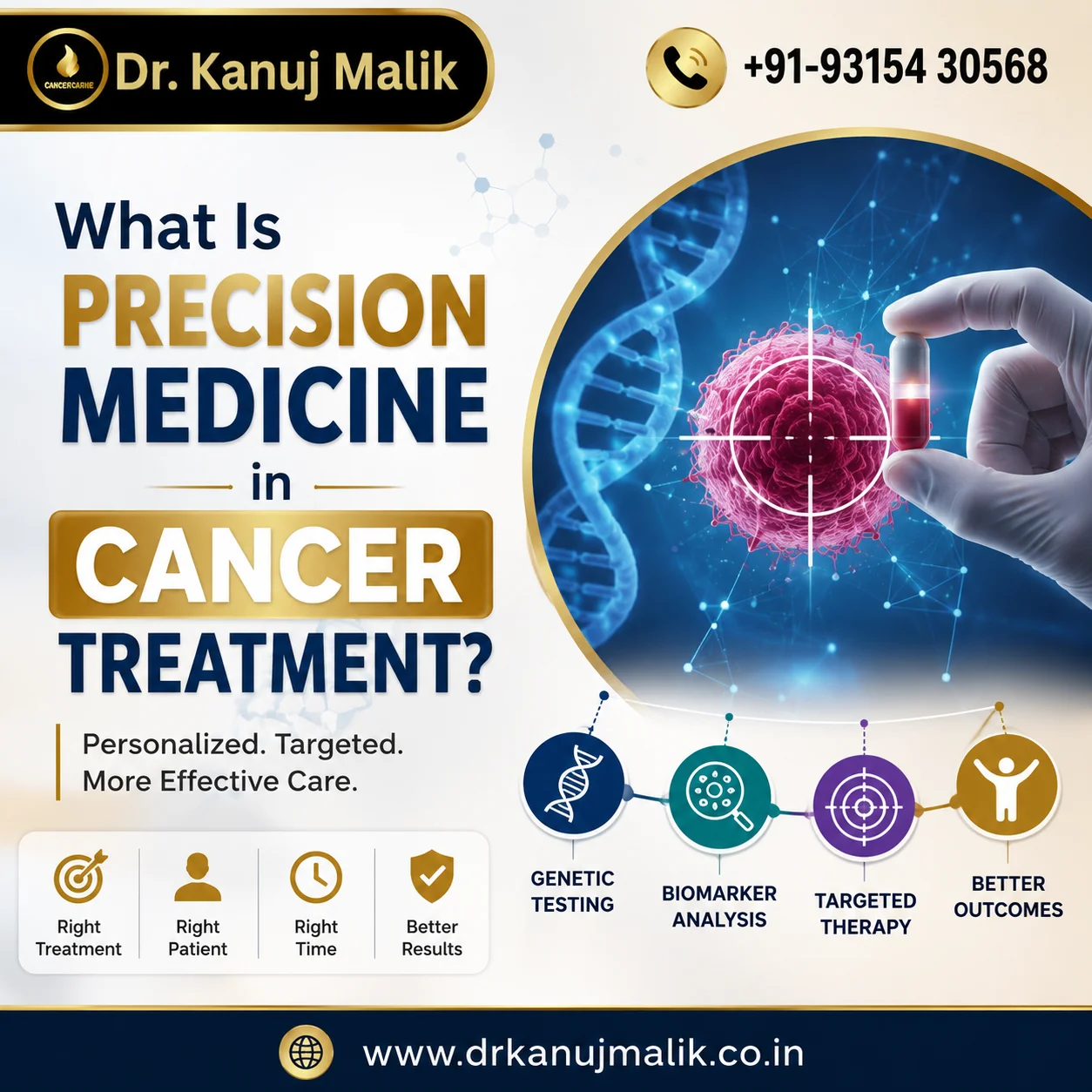
Precision Medicine in Cancer Treatment is a personalized approach that uses genetic, molecular, and biomarker information to select the most suitable treatment for a cancer patient. Instead of treating all patients in the same way, doctors study the specific characteristics of the tumor before creating a treatment plan.
Every cancer develops because of changes in genes. These changes are called mutations. Some mutations make cancer grow faster, while others respond well to targeted medicines. Precision medicine helps identify these mutations through advanced laboratory tests.
For example, two patients may both have lung cancer. One patient may have an EGFR mutation, while another may have an ALK mutation. Although both have the same cancer type, their treatment can be completely different because of these genetic differences.
This modern approach is also known as precision oncology or personalized cancer treatment. It allows doctors to recommend therapies that are more likely to work for a specific patient.
Why Precision Medicine Is Important?
Cancer is not a single disease. Each tumor behaves differently. Even cancers that start in the same organ may respond differently to treatment.
Precision Medicine in Cancer Treatment helps doctors:
- Select treatments based on the tumor’s genetic profile.
- Avoid medicines that are unlikely to work.
- Reduce unnecessary side effects.
- Improve treatment outcomes.
- Support better long-term disease management.
As cancer research continues to grow, precision medicine is becoming an important part of modern oncology.
How Does Precision Medicine in Cancer Treatment Work?
The process begins with understanding the cancer at the molecular level. Doctors do not choose treatment based only on the cancer’s location. They also study the tumor’s DNA and biomarkers.
- Clinical examination and medical history.
- Imaging tests such as CT scan, MRI, or PET-CT.
- Biopsy to collect tumor tissue.
- Biomarker testing and molecular analysis.
- Genetic or genomic testing.
- Identification of specific mutations.
- Selection of targeted therapy, immunotherapy, surgery, chemotherapy, or a combination.
- Regular monitoring to evaluate treatment response.
If you would like to understand how biopsy plays an important role before treatment planning, read our guide on biopsy in cancer diagnosis.
Precision Medicine vs Traditional Cancer Treatment
| Traditional Cancer Treatment | Precision Medicine in Cancer Treatment |
|---|---|
| Treatment is based mainly on cancer type and stage. | Treatment is based on genetic and molecular changes in the tumor. |
| Many patients receive similar treatment. | Every treatment plan is personalized. |
| Higher chance of unnecessary side effects. | More targeted approach with improved treatment selection. |
| Limited use of genetic testing. | Biomarker and genomic testing guide treatment decisions. |
| Focuses mainly on removing or destroying cancer cells. | Targets the specific mutations that help cancer grow. |
Precision Medicine vs Personalized Medicine
Many people think these two terms mean exactly the same thing. They are closely related, but there is a small difference.
Personalized medicine considers the patient’s overall health, age, lifestyle, family history, and medical conditions while planning treatment.
Precision Medicine in Cancer Treatment focuses more on the genetic and molecular characteristics of the tumor. It uses advanced laboratory testing to identify the exact mutation responsible for cancer growth.
Together, these approaches help doctors create safer and more effective treatment plans.
Types of Testing Used in Precision Medicine
Several advanced tests help doctors understand the biology of a tumor.
1. Biomarker Testing
Biomarkers are measurable biological indicators found in cancer cells. They help predict how a patient may respond to a specific treatment. Biomarker testing is one of the most important parts of Precision Medicine in Cancer Treatment.
You can also learn more about the role of blood tests and biomarkers in early cancer detection.
2. Genetic Testing
Genetic testing looks for inherited gene mutations that may increase cancer risk. It is commonly recommended for people with a strong family history of cancer.
Read more about genetic testing for breast and ovarian cancer and how it helps identify inherited cancer risks.
3. Genomic Testing
Genomic testing studies mutations that develop inside cancer cells. These mutations are not always inherited. The results help doctors identify targeted therapies that match the tumor profile.
4. Molecular Testing
Molecular testing examines DNA, RNA, proteins, and other molecular changes inside cancer cells. It provides valuable information for selecting precision therapies.
5. Next-Generation Sequencing (NGS)
NGS is an advanced technology that can examine hundreds of cancer-related genes in a single test. It helps identify rare mutations and treatment opportunities that traditional testing may miss.
6. Liquid Biopsy
Liquid biopsy is a blood-based test that detects fragments of tumor DNA circulating in the bloodstream. It is less invasive than a tissue biopsy and can help monitor treatment response over time.
Common Genetic Mutations Doctors Look For
One of the biggest advantages of Precision Medicine in Cancer Treatment is that it identifies genetic mutations that drive cancer growth. These mutations help doctors select targeted therapies that may provide better outcomes.
- EGFR: Common in certain lung cancers.
- ALK: Seen in a small percentage of non-small cell lung cancers.
- HER2: Found in some breast and gastric cancers.
- BRCA1 & BRCA2: Linked with hereditary breast and ovarian cancers.
- KRAS: Frequently seen in colorectal, lung, and pancreatic cancers.
- BRAF: Common in melanoma and some colorectal cancers.
- PD-L1: Helps determine eligibility for immunotherapy.
Understanding these mutations allows oncologists to recommend therapies that are more likely to be effective for each patient.
Which Cancers Can Benefit from Precision Medicine?
Precision Medicine in Cancer Treatment is now used for many types of cancer. The number continues to grow as research advances.
- Breast Cancer
- Lung Cancer
- Colorectal Cancer
- Ovarian Cancer
- Prostate Cancer
- Pancreatic Cancer
- Melanoma
- Leukemia
- Lymphoma
- Thyroid Cancer
Patients diagnosed with breast cancer may also benefit from learning about targeted therapy in breast cancer, which is an important part of precision oncology.
Benefits of Precision Medicine in Cancer Treatment
The goal of Precision Medicine in Cancer Treatment is to provide the right treatment for the right patient at the right time.
- More personalized treatment plans.
- Better treatment selection.
- Improved response in eligible patients.
- Reduced exposure to ineffective medicines.
- Lower risk of unnecessary side effects.
- Supports targeted therapy and immunotherapy.
- May improve quality of life during treatment.
Who Is Eligible for Precision Medicine?
Not every patient requires advanced molecular testing. Your oncologist will decide based on your diagnosis and medical history.
Precision medicine may be recommended for:
- Advanced-stage cancers.
- Recurrent cancers.
- Rare cancers.
- Patients whose treatment has stopped working.
- Patients with a strong family history of cancer.
- Patients who may benefit from targeted therapy or immunotherapy.
If you are uncertain about your diagnosis or treatment plan, consider reading our article on the importance of getting a second opinion in cancer care.
Is Precision Medicine Better Than Chemotherapy?
This is a common question among cancer patients.
Precision Medicine in Cancer Treatment is not a replacement for chemotherapy. Instead, it helps doctors determine the most suitable treatment approach.
Some patients may receive only targeted therapy. Others may need surgery, chemotherapy, immunotherapy, radiation therapy, or a combination of treatments.
The best treatment always depends on:
- Type of cancer.
- Cancer stage.
- Genetic mutations.
- Overall health.
- Previous treatments.
Limitations of Precision Medicine
Although precision medicine offers many advantages, it also has certain limitations.
- Not all cancers have targetable mutations.
- Advanced genetic testing may not be required for every patient.
- Some targeted medicines are expensive.
- Cancer cells can develop resistance over time.
- Access to specialized testing may vary.
Your oncologist will explain if precision medicine is appropriate for your specific condition.
Cost of Precision Medicine in India
The cost depends on the type of testing and treatment required.
- Biomarker testing may cost a few thousand rupees.
- Comprehensive genomic testing can be more expensive.
- Targeted therapies vary widely in price.
- Some insurance plans may cover a part of the treatment.
Your doctor can guide you regarding the most appropriate investigations and treatment options.
The Future of Precision Medicine in Cancer Treatment
The future of Precision Medicine in Cancer Treatment looks promising. Artificial Intelligence, molecular diagnostics, liquid biopsy, and next-generation sequencing are making cancer treatment more accurate than ever.
Doctors are also using advanced technologies to improve diagnosis and treatment planning. Learn more about the growing role of AI in cancer diagnosis.
Frequently Asked Questions
Is Precision Medicine a cure for cancer?
No. Precision medicine is not a cure. It is a treatment approach that helps doctors choose therapies based on the genetic profile of the cancer.
Does every cancer patient need Precision Medicine?
No. The need depends on the cancer type, stage, and availability of suitable biomarkers.
Is genetic testing always required?
Not always. Your oncologist will recommend testing only if it can influence treatment decisions.
Can Precision Medicine reduce side effects?
Targeted treatments may reduce unnecessary exposure to ineffective medicines. However, every treatment has potential side effects.
Is Precision Medicine available in India?
Yes. Many advanced cancer centers across India now offer biomarker testing, genomic testing, and targeted therapies.
Conclusion
Precision Medicine in Cancer Treatment represents a major advancement in modern oncology. By studying the genetic makeup of cancer cells, doctors can recommend treatments that are more precise and more effective for eligible patients.
Every cancer is different. Every patient is different. That is why treatment decisions should always be based on a thorough medical evaluation, appropriate testing, and expert clinical judgment. Early diagnosis and timely consultation with an experienced oncologist remain the foundation of successful cancer care.
Expert Cancer Care with Dr. Kanuj Malik
This article is medically reviewed to provide educational information for patients and families seeking reliable guidance on modern cancer treatment.
Dr. Kanuj Malik
Senior Surgical Oncologist
Phone: +91-93154 30568
Clinic Address:
Shop No. 143, 1st Floor, Cleo Street, Near Cleo County, Sector 121, Noida, Uttar Pradesh – 201301
Know more:
About Dr. Kanuj Malik
Surgical Oncologist in Noida
Discover Expert Cancer Care
Book a Consultation
Google Maps:
View Clinic Location