
After a cancer diagnosis, your doctor may discuss different treatment options. One of those options may include cancer clinical trials. Hearing the words “clinical trial” can make many patients nervous. Some people think they are being used as test subjects. In reality, cancer clinical trials follow strict medical and ethical guidelines designed to protect patient safety.
If you are wondering what happens during a clinical trial for cancer patients, this guide explains the complete process in simple language. Understanding each step can help you make an informed decision with confidence.
What Are Cancer Clinical Trials?
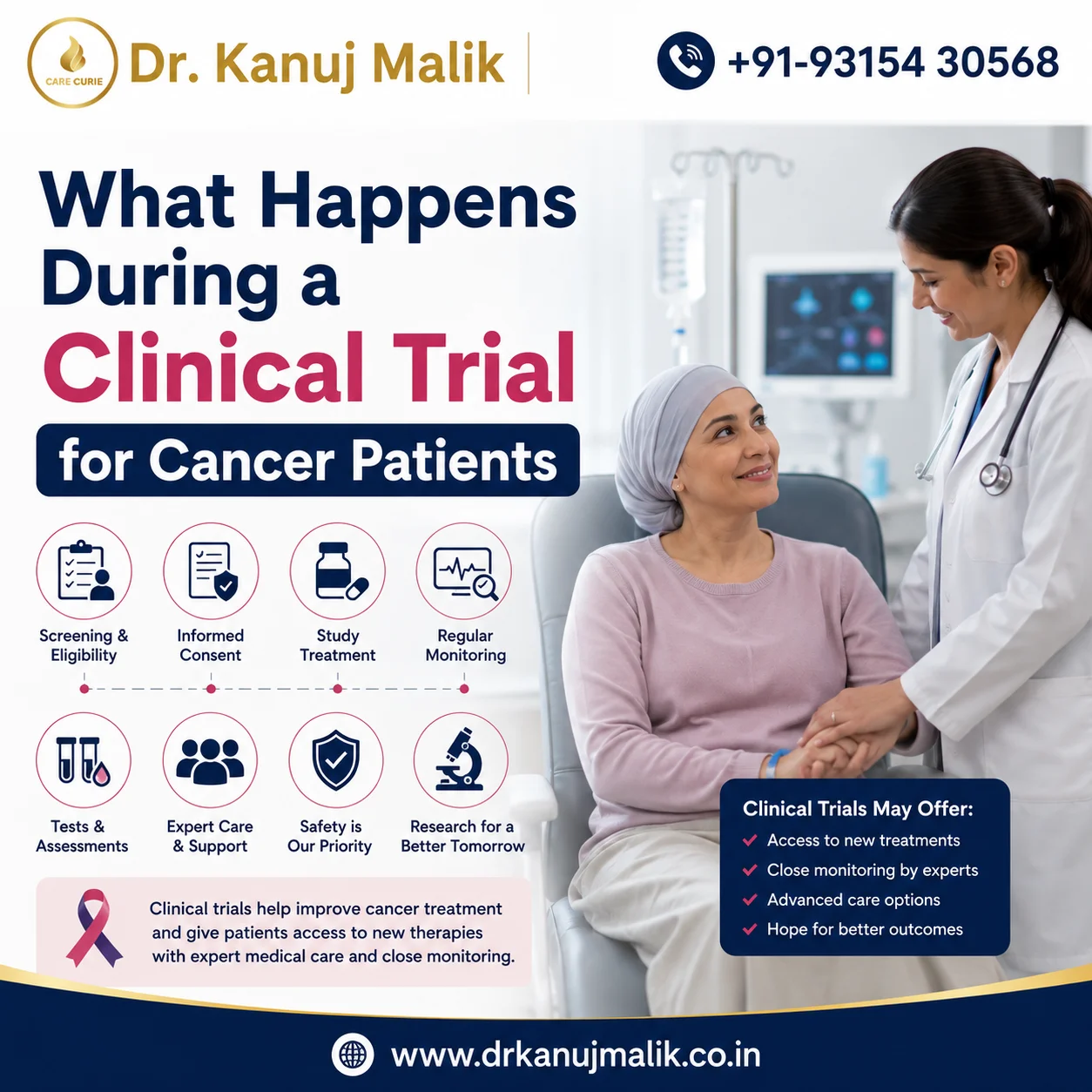
Cancer clinical trials are carefully planned medical research studies. They help doctors evaluate new cancer treatments, surgical techniques, medicines, immunotherapy, or combinations of existing treatments.
The goal is to determine if a new treatment is safe and more effective than the current standard treatment.
Every clinical trial follows strict scientific protocols. Before a new treatment becomes widely available, it must pass several stages of testing.
If you have recently been diagnosed with cancer, understanding the biopsy process in cancer diagnosis and the importance of getting a second opinion can help you better understand your treatment options before considering a clinical trial.
Why Do Doctors Recommend Cancer Clinical Trials?
Doctors recommend cancer clinical trials for different reasons. The recommendation depends on your diagnosis, cancer stage, previous treatments, and overall health.
Your doctor may suggest a clinical trial if:
- A promising new treatment is available.
- Standard treatment has not worked as expected.
- You have a rare type of cancer.
- Your cancer has returned after treatment.
- A personalized treatment approach may be beneficial.
Joining a clinical trial does not mean standard treatment has failed. In many cases, it simply gives eligible patients access to newer treatment options.
Who Can Participate in Cancer Clinical Trials?
Not every patient is eligible for every study. Each clinical trial has specific eligibility criteria.
Doctors may evaluate:
- Your age.
- The type of cancer.
- The cancer stage.
- Previous treatments.
- Your overall health.
- Blood test results.
- Imaging findings.
- Certain genetic or molecular markers.
These requirements help researchers produce reliable results while keeping participants safe.
What Happens During a Clinical Trial for Cancer Patients?
Understanding what happens during a clinical trial for cancer patients becomes easier when the process is explained step by step.
Step 1: Your Doctor Discusses the Clinical Trial
Your oncologist will explain why a particular study may be suitable for you. They will discuss the purpose of the trial, available treatment options, expected benefits, and possible risks.
This is the right time to ask questions.
Step 2: Eligibility Screening
Before joining cancer clinical trials, doctors perform several tests to confirm eligibility.
These may include:
- Physical examination.
- Blood investigations.
- CT scan or PET scan.
- MRI scan.
- Biopsy review.
- Medical history evaluation.
These assessments help determine if the study is appropriate for your condition.
Step 3: The Informed Consent Process
One of the most important parts of what happens during a clinical trial for cancer patients is the informed consent process.
Your research team will provide a detailed consent document explaining:
- The purpose of the study.
- The treatment being tested.
- Possible benefits.
- Possible side effects.
- Expected duration.
- Required hospital visits.
- Your rights as a participant.
Take time to read everything carefully. You should never feel pressured to sign immediately.
Can You Refuse or Leave a Clinical Trial?
Yes.
Participation in cancer clinical trials is completely voluntary.
You can decide not to join. You can also leave the study at any stage if you no longer wish to participate. Your decision will not affect your access to standard medical care.
Expert Perspective
This article has been medically reviewed based on the clinical expertise of Dr. Kanuj Malik, a Surgical Oncologist with over 14 years of experience in cancer care. He completed his MBBS and MS in General Surgery from Maulana Azad Medical College and Lok Nayak Hospital before pursuing an MCh in Surgical Oncology from the Cancer Institute (WIA), Chennai. Dr. Malik specializes in breast cancer, head and neck cancer, gastrointestinal cancer, gynecological cancer, genitourinary cancer, and minimally invasive cancer surgeries. Patients looking for expert guidance can learn more about Dr. Kanuj Malik or consult an experienced Surgical Oncologist in Noida to discuss suitable treatment options.
Phases of Cancer Clinical Trials
Every treatment used in cancer clinical trials goes through several phases before becoming part of standard cancer care.
| Clinical Trial Phase | Purpose |
|---|---|
| Phase I | Tests the safety of a new treatment and identifies the appropriate dose. |
| Phase II | Evaluates how well the treatment works for a specific type of cancer. |
| Phase III | Compares the new treatment with the current standard treatment. |
| Phase IV | Monitors long-term safety and effectiveness after approval. |
Each phase follows strict ethical and scientific standards to protect patients.
What Are the Benefits of Cancer Clinical Trials?
Many patients join cancer clinical trials because they may provide access to innovative treatments before they become widely available.
- Access to new therapies.
- Close monitoring by an experienced oncology team.
- Regular health assessments.
- Opportunity to contribute to future cancer treatments.
- Advanced treatment options that may not be available elsewhere.
Some studies also explore advanced therapies like immunotherapy for cancer treatment and personalized medicine in cancer care, offering new possibilities for selected patients.
Are There Any Risks?
Like every medical treatment, cancer clinical trials also have potential risks. Your doctor will explain these before you decide to participate.
Possible risks include:
- Unexpected side effects.
- The treatment may not work for everyone.
- Additional hospital visits.
- Extra blood tests or imaging.
- Longer follow-up appointments.
Understanding both the benefits and risks helps you make an informed decision.
Who Pays for a Clinical Trial?
The costs vary depending on the study.
Some expenses may be covered by the study sponsor, while routine medical care may still be billed according to your hospital or insurance policy.
Before joining a trial, ask your research team about:
- Treatment costs.
- Diagnostic tests.
- Travel expenses.
- Hospital visits.
- Insurance coverage.
Common Myths About Cancer Clinical Trials
| Myth | Fact |
|---|---|
| Clinical trials use patients as experiments. | Every study follows strict ethical guidelines and patient safety protocols. |
| Only patients with advanced cancer can join. | Clinical trials are available for different cancer stages and treatment situations. |
| You cannot leave after joining. | You can withdraw at any time without affecting your standard medical care. |
| Clinical trials always involve placebo treatment. | Most cancer clinical trials compare new treatments with the current standard of care. |
Questions to Ask Before Joining a Clinical Trial
Before participating in cancer clinical trials, consider asking your healthcare team:
- Why is this trial recommended for me?
- What are the possible benefits?
- What side effects should I expect?
- How often will I need hospital visits?
- Will I continue receiving standard treatment?
- Who should I contact during an emergency?
Role of Family During a Clinical Trial
Family members often play an important role throughout the clinical trial journey.
- Attend important discussions.
- Help understand the consent form.
- Keep medical records organized.
- Monitor symptoms or side effects.
- Provide emotional support during treatment.
Supportive care is equally important. Reading about the role of support groups in healing from cancer and nutrition during chemotherapy and radiation therapy can also help patients and caregivers prepare for treatment.
Final Thoughts
Understanding what happens during a clinical trial for cancer patients can reduce fear and help you make informed decisions. Cancer clinical trials are carefully monitored research studies designed to improve cancer treatment while protecting patient safety.
If your doctor recommends a clinical trial, ask questions, review the informed consent carefully, and discuss the decision with your family. Every patient’s situation is unique, and the right choice depends on your diagnosis, treatment goals, and medical advice.
Frequently Asked Questions
Are cancer clinical trials safe?
Yes. Every clinical trial follows strict ethical guidelines and is closely monitored to protect participants.
Can I leave a clinical trial after joining?
Yes. Participation is voluntary. You can withdraw at any stage without losing access to standard medical care.
Will I receive a placebo?
Not always. Most cancer clinical trials compare a new treatment with the current standard treatment rather than giving only a placebo.
How long does a clinical trial last?
The duration varies depending on the study. Some trials last a few months, while others require long-term follow-up.
How do I know if I qualify for a cancer clinical trial?
Your oncologist will review your diagnosis, cancer stage, previous treatments, overall health, and test results to determine your eligibility.
Talk to an Experienced Surgical Oncologist
If you would like to understand if a clinical trial is suitable for your condition, consult an experienced specialist. Contact Dr. Kanuj Malik or book your consultation to discuss your treatment options and receive personalized cancer care.